A History of the Arboretum
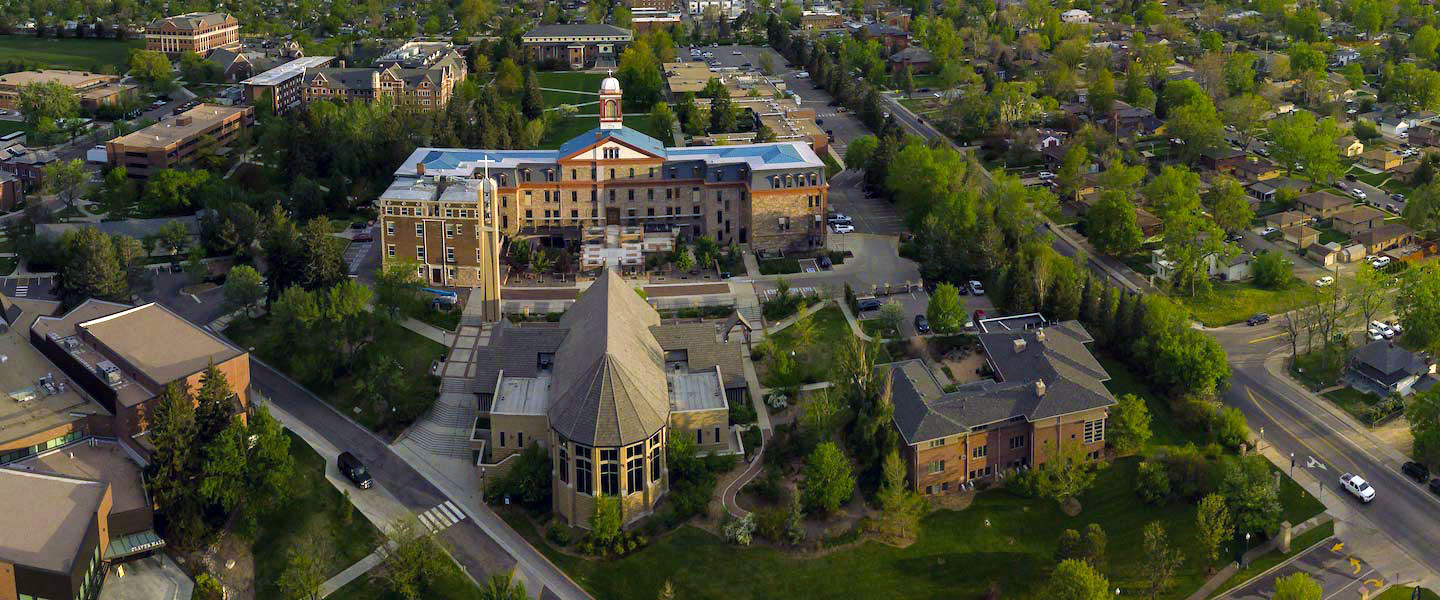
When Regis University arrived at its new campus in 1887, the land was virtually devoid of trees and woody shrubs, much like the rest of the region except along a few permanent waterways. Over the following century, campus plantings developed painstakingly, as they did throughout the Front Range, despite the challenges of the fickle, semiarid High Plains environment.
The Regis Arboretum began taking shape much later, in the mid- to late 1980s, adding to the diversity of the campus’s established plantings. Fr. Jack Callahan, S.J., a University administrator with a passion for botany and especially arboriculture, took the first steps. He planted unusual tree species obtained through mail-order sources and scoured local nurseries for the occasional orphaned sapling.
A short time later, Regis hired horticulturist Marita Tewes, who also recognized the potential to build a true arboretum: a collection of woody plants maintained for scientific and educational purposes. She continued building on Callahan’s work.
Over the following years, the tree collection grew. Some species were rare, while others, though less rare, were uncommon or unproven in the region at the time. Today, some of those early plantings have prospered to become Colorado champion trees, recognized by the Colorado Tree Coalition as the largest of their species in the state. One of the best examples is the champion sawtooth oak on Boettcher Commons. Once an unheard-of species in the region, it began as a spindly sapling planted by Callahan.
Since the 1980s, the University’s steadily growing tree collection has received the support of many people, including Martin Hart, a member of the Regis University Board of Trustees. Hart provided funding to identify, catalog and tag the woody plants on campus and to construct the Arboretum Kiosk near parking lot 4.
This work culminated in the arboretum’s official designation during a dedication ceremony held in conjunction with the Mass of the Holy Spirit in September 2000. After more than another decade and a half of acquiring new species, the arboretum reached a new professional milestone in 2018 when it received Level II accreditation from ArbNet, an international network of arboreta administered by The Morton Arboretum near Chicago.
As of 2026, the Regis University Arboretum includes an estimated 440 distinct tree species, hybrids and cultivars, along with more than 100 species of woody shrubs. Much of the arboretum’s expansion over the past several decades was overseen by Patrick Schlanger. As Director of Regis Physical Plant Operations, Schlanger’s responsibilities included campus landscaping. Many others, including Regis employees, volunteers, academics and green industry leaders, also contributed greatly to the arboretum’s development.
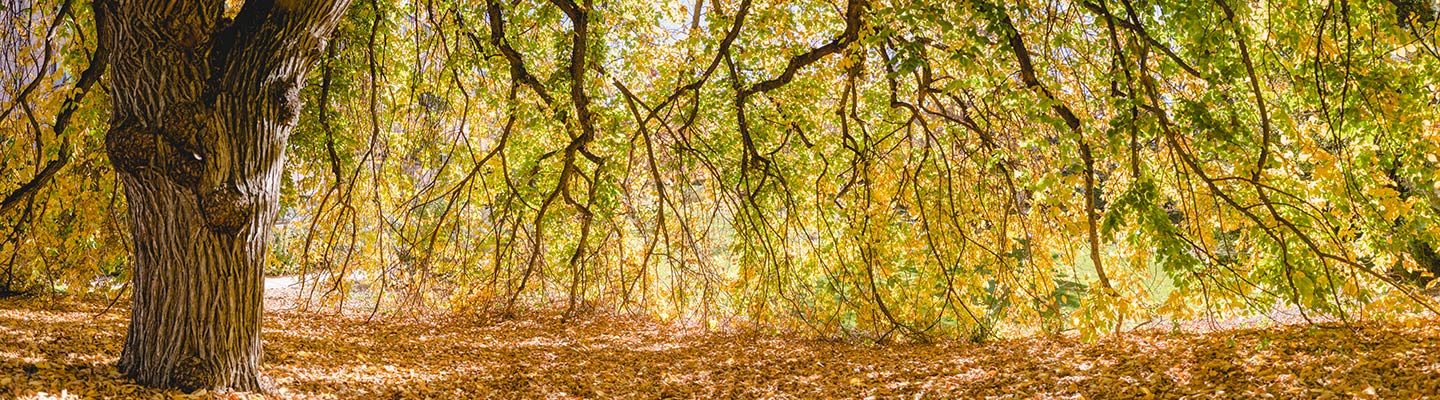
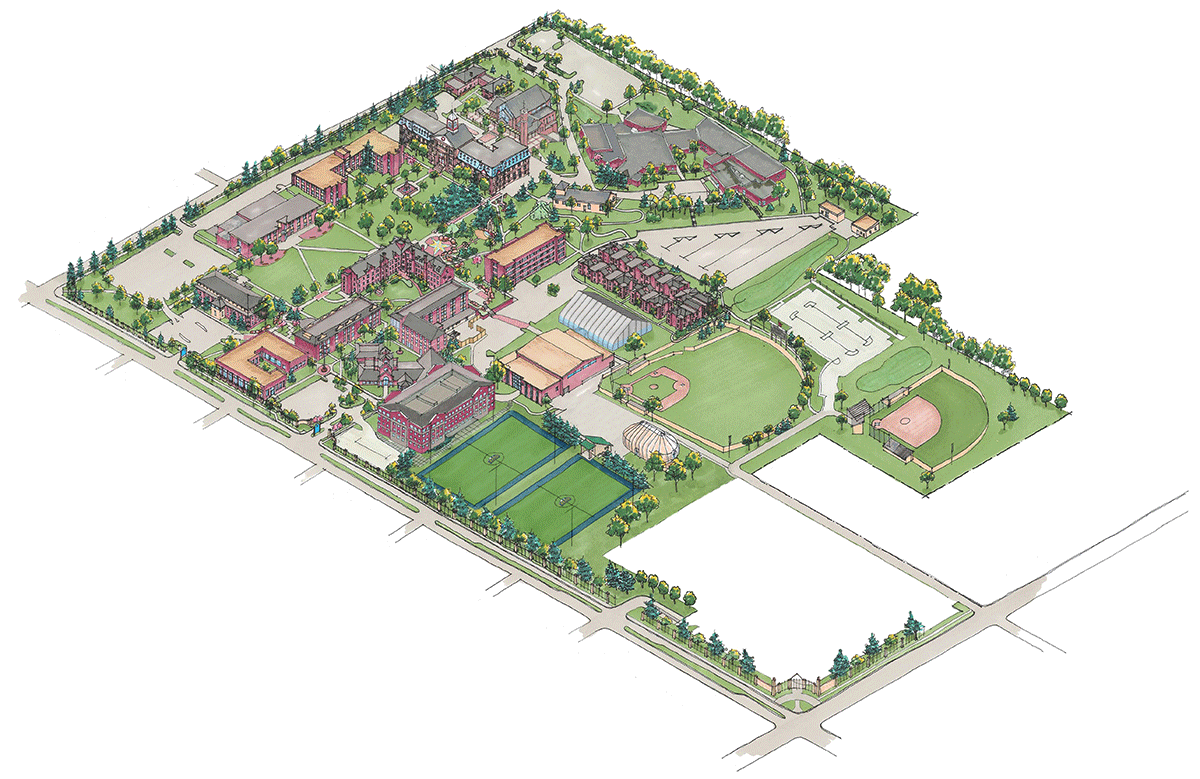
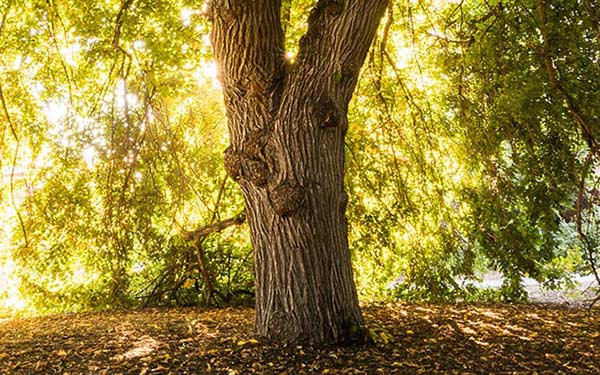
Today, the tree collection provides a beautiful, naturalistic setting for the campus. Spectacular mature specimens serve as focal points near major buildings. These include the champion tricolor beeches near Carroll Hall and St. John Francis Regis Chapel, the saucer magnolias near Carroll Hall and the Felix Pomponio Family Science Center and the tanyosho Japanese pines near Claver Hall. There is also the magnificent American weeping elm near O’Connell Hall, an unforgettable sight for those who visit it.
The arboretum’s research and educational functions are equally important and reflect Regis’ Jesuit teaching traditions. Guided tours have welcomed groups ranging from elementary schoolchildren and retirees’ garden clubs to the National Association of State Foresters. Some plantings are designed to reflect regional ecology, including the Colorado native trees near the O’Sullivan Fine Arts Center.
Over the past 10 years, the University has experimentally planted a wide variety of drought-adapted tree species in hopes of demonstrating new options for chronically drought-stressed cities. The arboretum has also received donations of promising cultivars from commercial nurseries, allowing their ability to withstand the region’s often harsh climate to be tested. In addition, it serves as an ex situ repository for more than 10 tree species of conservation concern, most of which are native to North America.
Many of the arboretum’s trees have unique histories of their own. Some were already large when they arrived. The four Norway spruces now located east of Residence Village, for example, were successfully transplanted in 2003, which was neither an easy nor inexpensive task.
Several large deciduous trees were also moved to the north side of Carroll Hall in 2004 to make way for the construction of St. John Francis Regis Chapel in 2005. They included a Chinese chestnut, a Carpathian walnut and a European beech, all of which continue to thrive in their new locations.
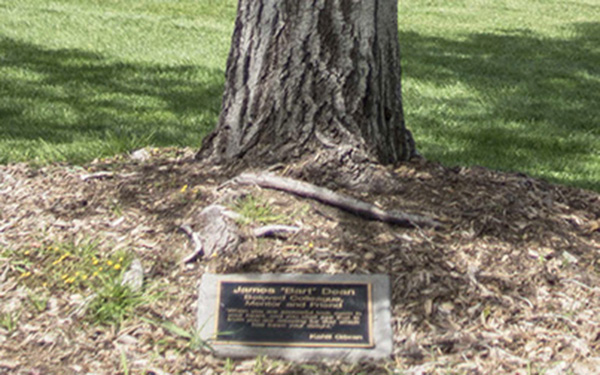
Other trees have deep cultural connections. A Japanese white pine at the Coors Life Directions Center was planted by the Dalai Lama and Schlanger. Many of the arboretum’s trees also hold intensely personal significance for past and present Regis students and employees, as well as anyone else who has spent time on the University’s campus.