Regis Life
Reviving and remembering tradition: Three Santeros at Regis University
From Feb. 3 through 27, Regis University hosted the Three Santeros exhibition in the Dayton Memorial Library, curated by Fine Arts professor, Tony Ortega, M.A. Paired with the exhibition is Ortega’s course, FAHS-460/ CAS-410P New Mexico Santos Tradition. The exhibition invites viewers to interact with santos and their santeros: Carlos Santistevan, Frank Zamora and Sean Trujillo.
A “santo” is a religious sculpture or icon which has originated and developed from colonial Spanish iconography. The three artists in the exhibition derive from the santo-making tradition of New Mexico, with each having their own style of craftsmanship and expression.
The Santos Collection at Regis University was initially founded by respected faculty member and curator Rev. Thomas J. Steele, S.J., with his personal collection which he began collecting in the 1960s. Upon his passing in 2010, the University took over curatorship of the collection, which is open to the public for viewing and research.
Alongside those selected by Ortega, each student in the course spent time delving into Regis University’s Santos Collection to find a piece of their choice to include in the exhibition. Taking on the curator role, Ortega intended for the students to gain a new perspective of an often-untold American history.
“There's a unique perspective on Catholicism, and that comes out through the saints that they venerate because of the environment they lived in,” said Ortega. “I'm hoping my students can see that that part of what we can call American history isn't known.”
To fully engulf his students in history and tradition, Ortega invited each artist of the exhibition to speak with his class and share how they’ve developed the santos-making tradition in front of their pieces at the exhibition. On Feb. 4, santero Carlos Santistevan visited with the class to share how he is bringing modern Chicano culture into the New Mexican santos tradition.
As a young man, Santistevan was discouraged by those around him from continuing his education, jumping into body and fender work for cars. And as Santistevan described: “I never decided to become an artist ... I just started doing it.”
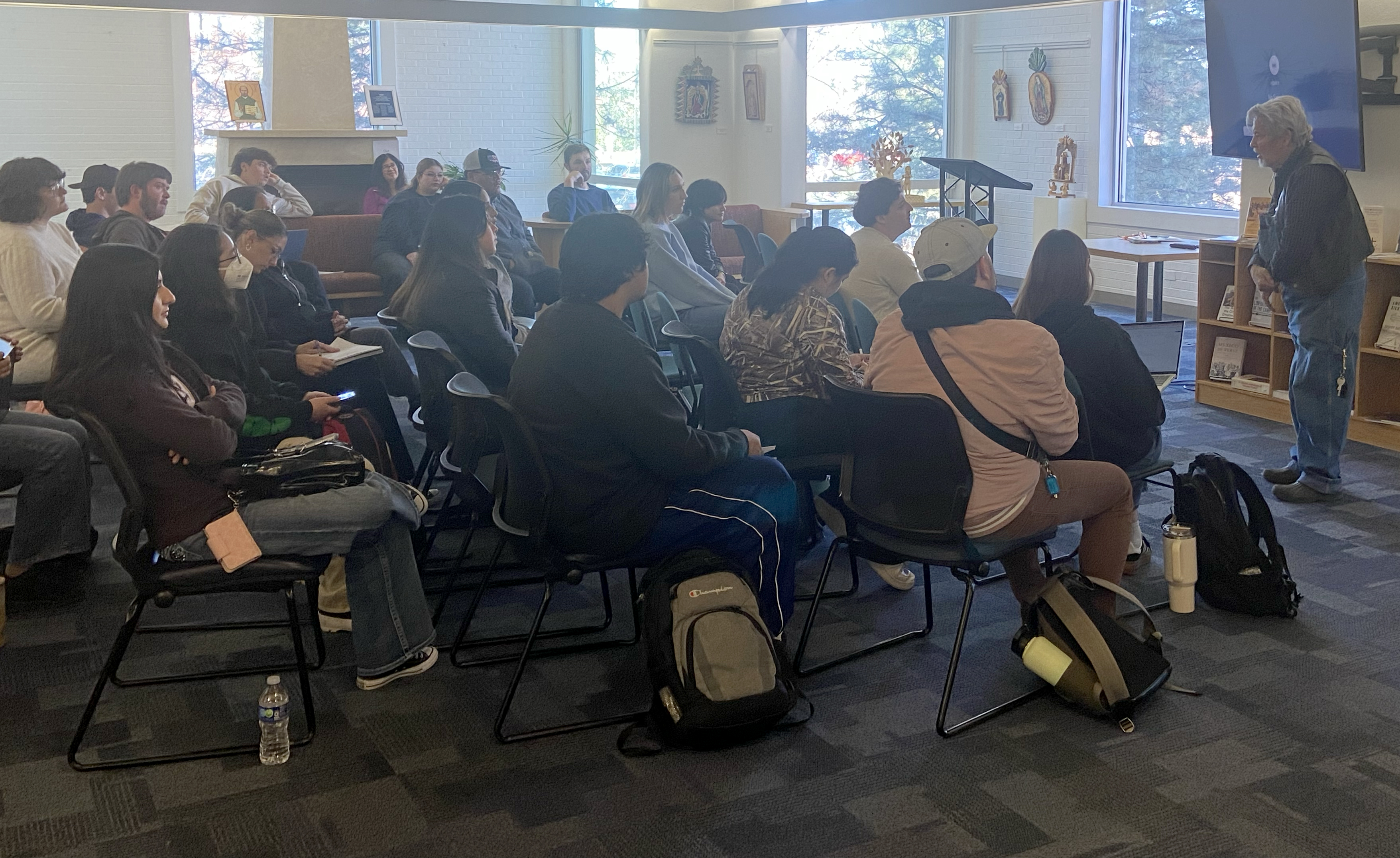
In the shop, Santistevan learned skills in metalworking and engineering, which he brought together with his childhood hobby of carving toys. Taking scrap metal and wood, using materials that he could source on his own, he began fabricating New Mexico-style santos and his own original art.
Santistevan, while a santero, introduced the many non-santos pieces in his body of work. Crafting models of wooden low riders and unconventional effigies from worn-out car parts, Santistevan showcased how his Catholic and Chicano background has influenced all parts of his artistic process.
After becoming involved with the Crusade for Justice, the Denver-based Chicano movement, Santistevan was invited to the Traditional Spanish Market in Santa Fe, New Mexico. This event is an annual market where santeros and other colonial-tradition artists sell their work.
A veteran santero, Santistevan showed and sold his art for many years, with his children and eventually grandchildren joining in to sell their own pieces alongside him; sharing his tradition and artistic path with the next generation of artists.
On Feb. 18, santero Sean Trujillo shared the process and products of his santos making with the class. Following in Santistevan’s path, Trujillo is bringing the santos-making tradition to new audiences.
A decade ago, as Trujillo was getting started in his artistic career, he was introduced to the Regis University Santos Collection. From this one introduction, Trujillo realized his own potential to create santos.
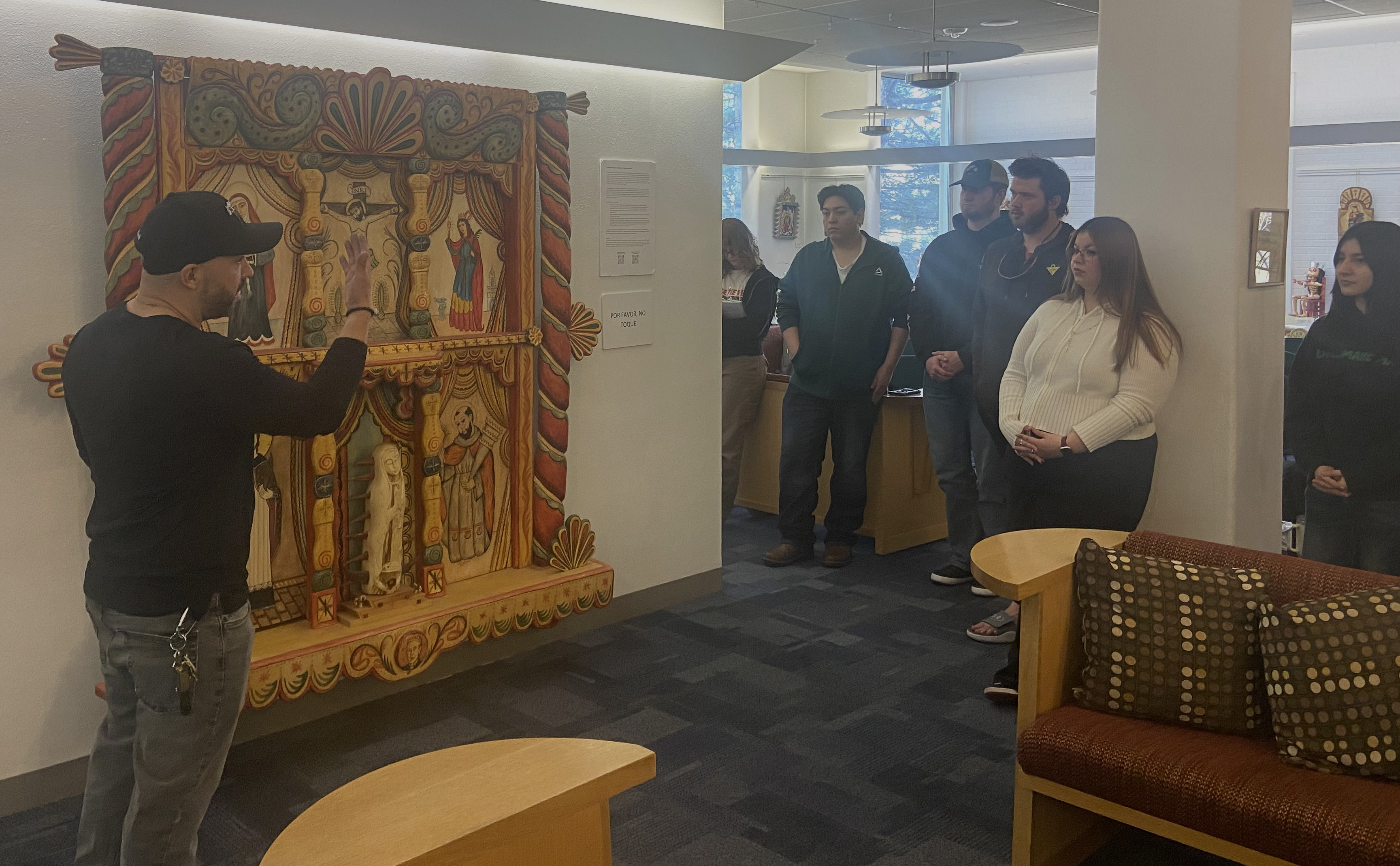
“My family's been in Colorado and the northern New Mexico region for generations; this has always been a part of who we are,” said Trujillo. “We've always heard the prayers; We’ve always practiced our faith. But it never really resonated until somebody from outside showed me, and that was when I realized this is something that I could do.”
A Colorado native, Trujillo presents his santos as truly and wholly Coloradan. Crafting his natural pigments from local landmarks like Red Rocks, Trujillo injects his work with a Colorado flair unseen in New Mexican santos. Learning from the elders of the tradition, like Santistevan and Zamora, Trujillo is bridging the gap in tradition as years pass.
As the programming director of the Museo de Las Americas in Denver, Trujillo enjoys bringing these traditions to passionate young adults through educational and recreational programming surrounding santos and other pre- and post-colonial artwork.
“I think this is one of these treasured traditions that we have, specifically in Colorado and New Mexico, that not a lot of people talk about.” Trujillo continued, “I'm always out in the community, doing workshops with kids and adults because as I get older, it seems like a lot of these traditions become less and less prevalent.”
For Regis, sharing and preserving these unique expressions of faith and history is incredibly valuable. With an archive of over 1000 santos, the collection continues to educate more of Regis’ incoming students and community. In Trujillo’s own words: “nobody else really invested in santos like Regis.”
As the semester continues, Ortega’s students are delving ever deeper into the santos-making tradition. Each student has been instructed to research and select a saint of their choice and make a santo of their own. They will mirror and innovate their own pieces based on the santos that they have both curated and experienced in person. By the end, these student-made santos will be put on display in Regis’ Main Hall.
Through experiencing and now making their own santos, Ortega reflected how, as a Hispanic Serving Institution, Regis University is providing students with a true multicultural experience to learn from.
“I'm hoping that my Hispanic students start learning a piece of their history that they didn't know about, and for my non-Hispanic students, I'd like them to learn too about the people who eventually they’ll be working with and participating in community events," said Ortega. “It's always better if you have a better understanding of who you are, right?”
The Regis University Santos Collection is on display year-round on the third floor of the Regis University Library and is also available to view online.