Regis Life
A Cookbook for Community: Regis students connect through cultural cuisines
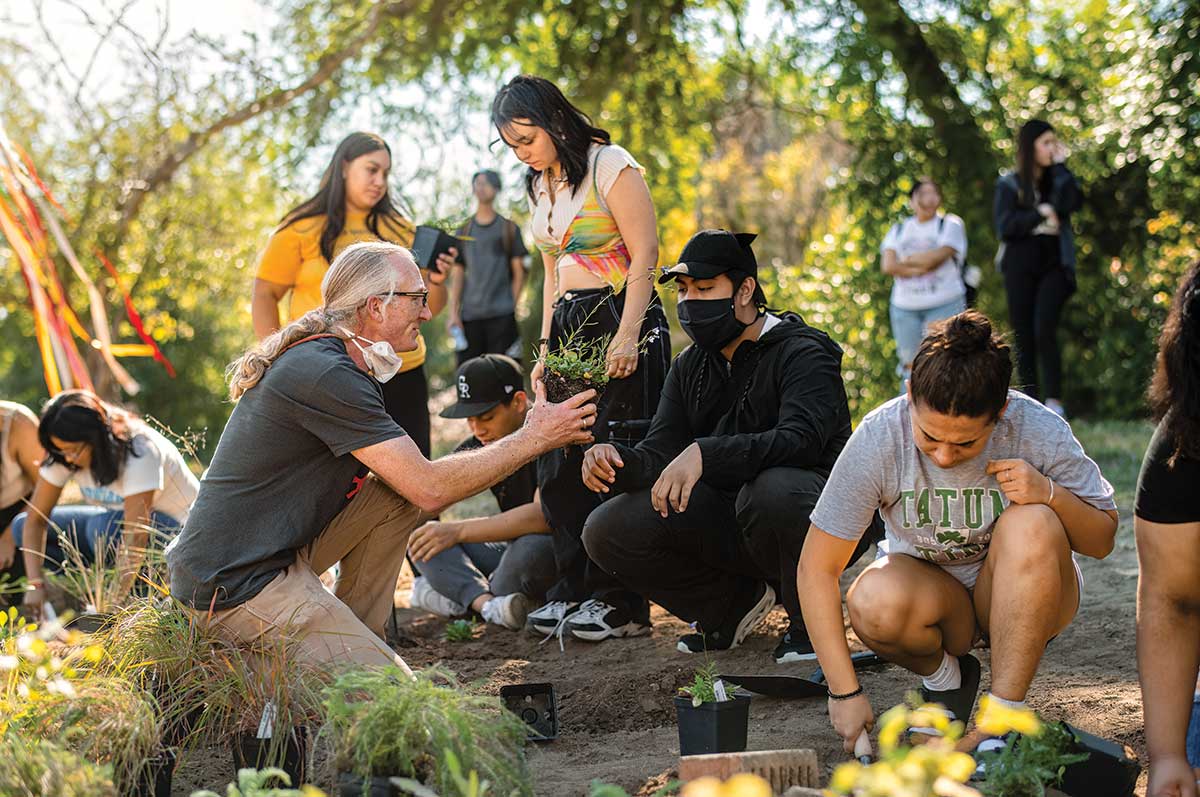
The shared communities of Regis University are a vast, interwoven tapestry of students, faculty, friends and family that reaches far beyond the bounds of campus. This spring, psychology professor Julie Sriken, Ph.D., sent her Community Psychology class into the hearts of the Regis community for a research project with a culinary twist. Students were instructed to engage with a community issue at Regis by gathering valuable qualitative research alongside a recipe that represents their chosen community.
The students began their research by first exploring and interrogating their own understandings of “community.” For Professor Sriken, a seasoned community researcher, this foundation is the key to starting to make a difference.
“One of the most basic questions in our community psychology class is: ‘What do we mean when we're talking about community?’ I chose one community that I knew everyone was a part of, which was the Regis community,” said Sriken. “I really wanted it to be like a way to take psychological training to benefit the community.”
Next, students conducted a literature review, analyzing the existing research surrounding the community issue that they identified. From there, each student was instructed to reach out to a member of their community of choice and conduct an interview. They collected not only useful qualitative data from their subject, but also a unique recipe that reflects the community they belong to. As Sriken described: “The qualitative interview is taking someone's lived experience and putting it into conversation with this literature that already exists.”
Each recipe, alongside the relevant cultural notes, will be compiled by Professor Sriken into a cookbook. This cookbook, through the efforts of each student and interviewee, will be available for purchase, with proceeds supporting Regis’ Community for Belonging (CoBe). The funds will be dispersed for CoBe’s RU First program, which is a comprehensive, four-year scholarship program for first-generation students at Regis, and the end-of-year graduation barbecue.
For Sriken, this unique research opportunity easily gives students real-world access to the work of practicing psychologists. She described how, through the project, students bring the academic frameworks that they’ve been working with to life.
“They'll see where abstract ideas, academic theories, align and don't align with lived experiences,” said Sriken. “We can use our training in lots of different ways to support the community, even something as simple as taking an interview and turning it into a fundraiser.”
Cross-listed with both the Women and Gender Studies department and Regis’ GLOBAL Inclusive Program, the course crafts an effective multidisciplinary and inclusive framework. This intersection of learning ultimately widened the breadth of communities explored by each student. From professors and roommates to high school track coaches and local non-profits, these students dove deep into the communities that they interact with every day as both members and observers.
“It allows people to kind of get a microscope into Regis and what kind of different communities there are under the umbrella of what Regis is,” said student Riley Simmons. She continued, “what we face on a day-to-day basis, and how we live our lives and what we experience.”
Niobe Camacho, a senior and psychology major, decided to draw from the community of women of color in higher education. She reached out to her high school track coach, a Regis graduate who currently works as a vice principal. The interview grew Camacho’s awareness of the issues surrounding women of color in education, allowing space to reflect on her own experiences as a woman of color at Regis. The interviewee’s recipe, titled “My mama's smoked turkey or ham hocks and beans,” was a dish that her mother made when she would come home from college.
“My interviewee, she identifies as Black, and there aren’t a lot of articles talking about how Black women are represented in higher education,” said Camacho. “Getting that perspective and kind of trying to understand her upbringing and her story behind higher education was really important for me to understand everyone's experience.”
Directing research introspectively to campus life, senior and psychology major Ivy Holtzinger selected the international student community as her community framework. Interviewing her close friend, an international student from Nepal, she recorded a recipe for “Chiya,” a Nepali spiced milk tea. Holtzinger hopes her research will inform measures for the different communities that intersect at Regis.
“My hope is that it's representing the student voice that's on campus.” Holtzinger continued, “But also having an interview that sheds some light on what's working, what's not working, and what this community is maybe looking for that can be represented in a really cool way.”
Mariana Sandoval, another psychology major in her final year at Regis, expanded what the Regis community encompasses through her research. Sandoval reached out to Chris Meeks, founder of Hope Homes in Colorado Springs. Hope Homes is an organization that provides sober reentry housing to men who were previously incarcerated or unhoused.
Regis University shares the community mission of service with Hope Homes, serving together locally. Sandoval described how Meeks connects to the community through the recipe he shared for the cookbook:
“Meeks’ recipe was nachos, to emphasize the importance of community,” said Sandoval. “Nachos are to be shared with everybody, and that's what his work does as well.”
Now that the spring semester has ended, each of these narratives and recipes will be gathered, edited and curated into the finished cookbook to be released this fall. For Professor Sriken and each student, they hope that this cookbook affirms the identities of each of their chosen communities.
“There are so many sources that are going to tell us who we are and what we're about, and I think there's so much power in us documenting how we want to be seen,’” said Sriken. “I want it to be recognized.”