Regis Life
Restoring, repairing and reconnecting with Regis University’s campus
Throughout the years, Regis University’s campus has undergone many changes. In fact, the campus used to be home to a lake, which was filled in the early 1950s to make way for the construction of O’Connell Hall in 1957. From filling in a lake to the new enjoyable amenities built this year, Regis University has grown and changed considerably over its nearly 150-year history.
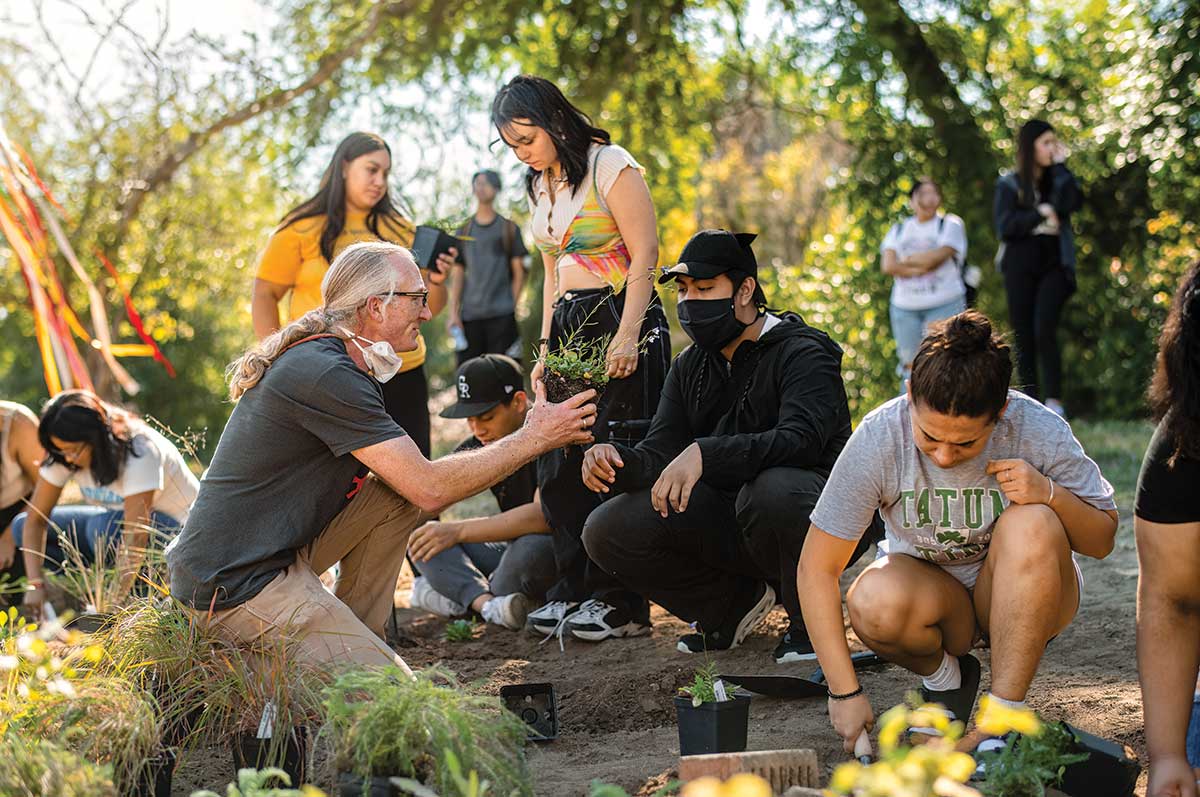
On Thursday, June 19, 2026, a garden plot was unveiled to the community for the first time. This garden, located on the east side of the science building, is the project of Regis biology and environmental science professors Bethany Lucas, Ph.D., John Sakulich, Ph.D. and Ariel Wooldridge, Ph.D. Through the support of the Sisters of St. Francis and Regis’ Physical Plant, the garden is intended to be both a learning space and functional food source for Regis students.
Biology and environmental science students will have access to a “living” lab where they will study pollinator behaviors, plant growth and soil quality. According to Wooldridge and Lucas, a substantial number of students have expressed a disconnect with the process of food production and farming, instilling a desire to also educate students on where food comes from.
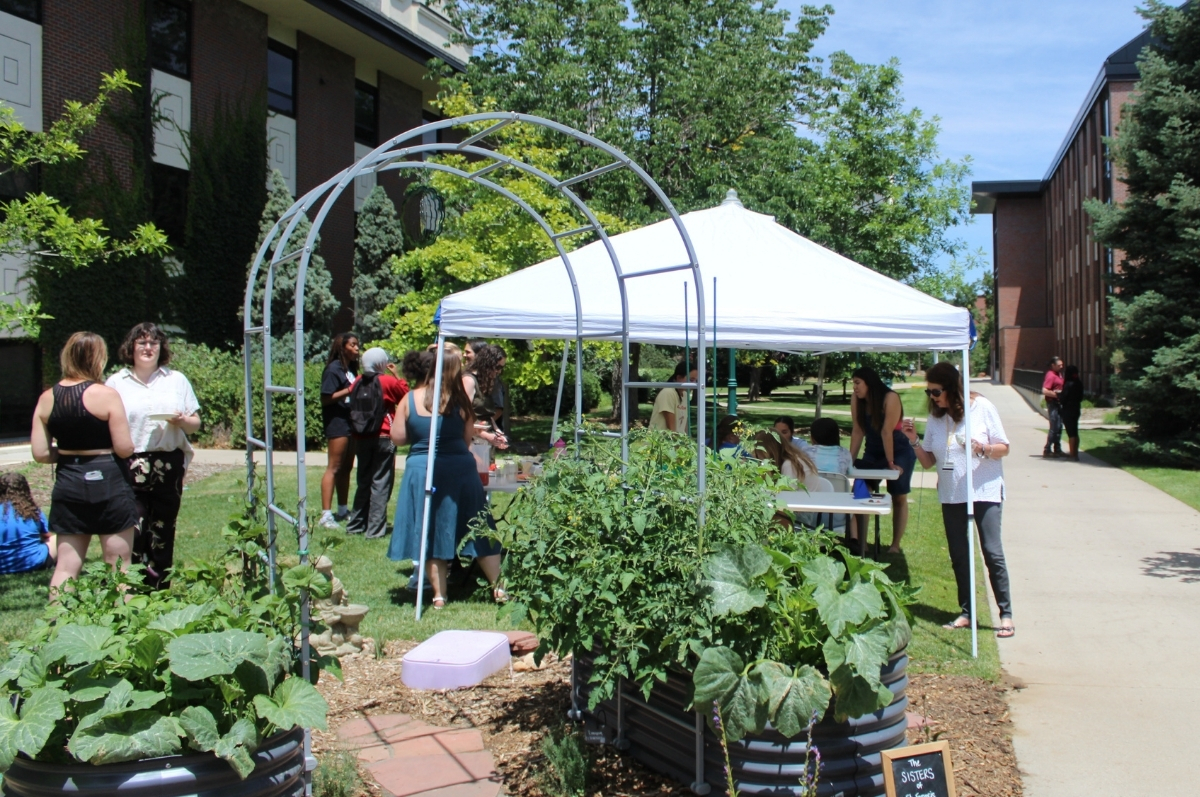
“The garden will help spark important conversations about sustainable farming and agriculture, food security and food systems,” said Lucas. “Even something small, where we can start that discussion on campus, helps connect and educate both our students and our community to what else is out there.”
With food systems in mind, the garden is filled with native plant life, which not only supports native pollinators but will support students. The fruits and vegetables grown in the garden will be donated to the Ranger Co-Op's food pantry, which is accessible to all students.
“With sustainability, people think it's all work and no payoff,” said Lucas. “But it's usually relatively low-stakes projects that have the most impact, and this is proof of that.”
In continuing to beautify and diversify campus, a meditation labyrinth now sits outside of the St. John Francis Regis Chapel on the north end of campus. This new landmark is a representation of Regis’ commitment to Laudato si’, creating a new reflective space connected to the outdoors and the tranquility of nature.
After the pavers outside of the chapel were deemed ready for repair, the Office of Mission turned routine maintenance into an opportunity for Regis’ commitment to faith and mission. The labyrinth was made possible through Regis’ annual Regis Gives fundraising campaign in 2025, being completely funded using donations from the generous Regis community.
Labyrinths, according to Interim Vice President of Mission, Kari Kloos, Ph.D., have been used in religious contexts for thousands of years. In their winding and contemplative patterns, labyrinths are microcosms of a spiritual journey. Kloos noted that, unlike a maze, a labyrinth has no dead ends; rather than a puzzle, labyrinths are a process.
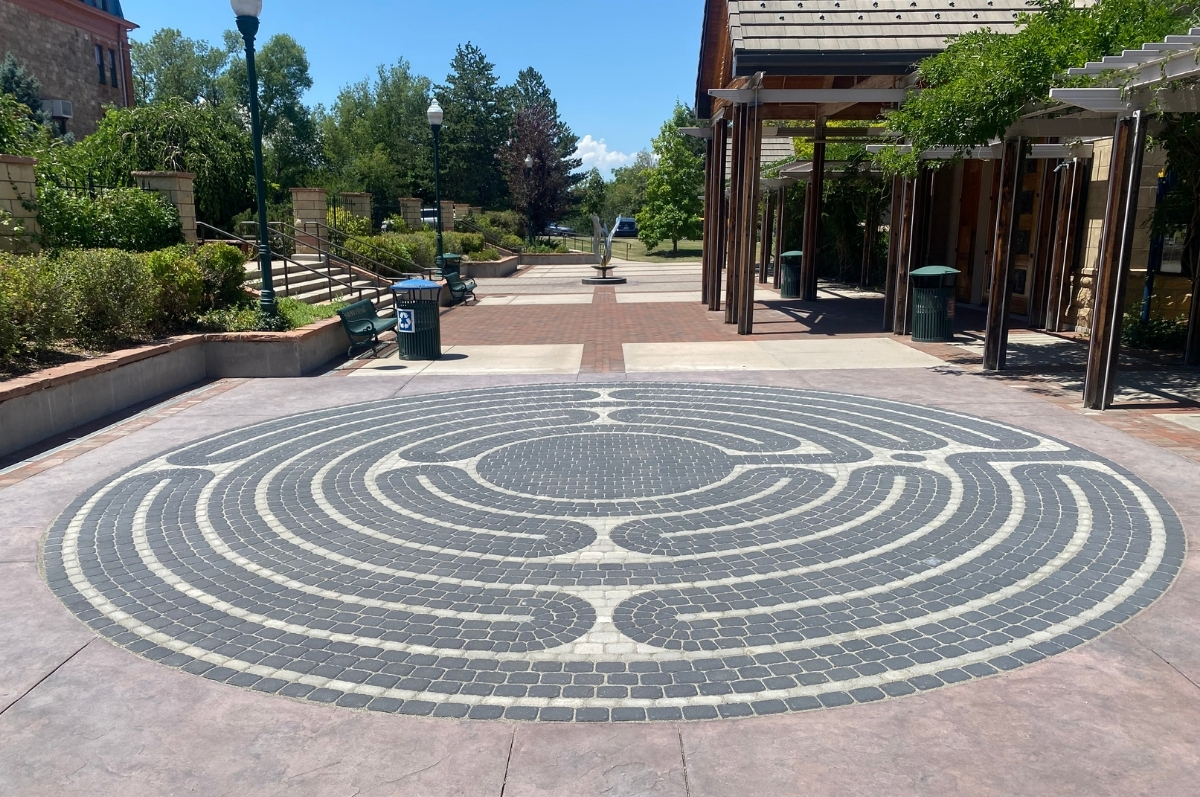
“You take the twists and turns and don't necessarily see the straight path, but every step takes you a step closer to the center, even when it doesn't feel that way,” said Kloos. “Every step matters.”
The labyrinth is, importantly, open and accessible to all who wish to use it. Kloos emphasized the labyrinth’s universal usage. She invites all who wish to take a mindful journey to utilize this new facet of the campus.
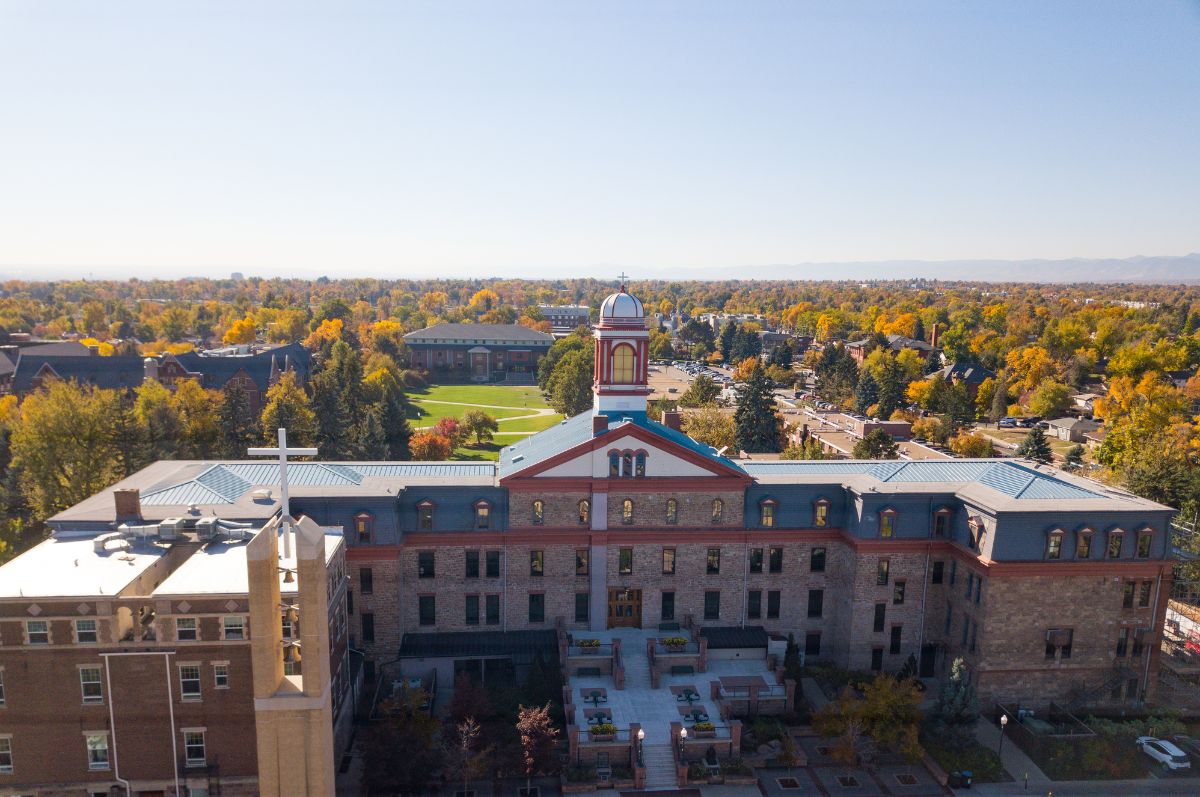
Looking towards campus’ main landmark, Main Hall, the front patio and steps had a facelift in the fall of 2025, returning them to their original roots while recognizing a milestone fundraising campaign. The campus icon was in need of maintenance to its front steps for both safety and aesthetic purposes, creating the right opportunity to celebrate Regis’ history.
For Mike Redmond, Associate Vice President of Regis’ Physical Plant, maintaining Regis’ historical flair is important to the campus’ integrity. The stairs were rebuilt from the inside out, while still using the same materials original to the building. And while the brickwork on the octagonal patio is new, it highlights the historical statue of the Sacred Heart, framing it through the doors of Main Hall to the St. John Francis Regis Chapel just to the north.
“One of the key things that we've stressed since I've started at Regis is returning the campus to the historical way it was,” said Redmond. “The key is how the students remember campus, and when they come back, they see it's still there but enhanced.”
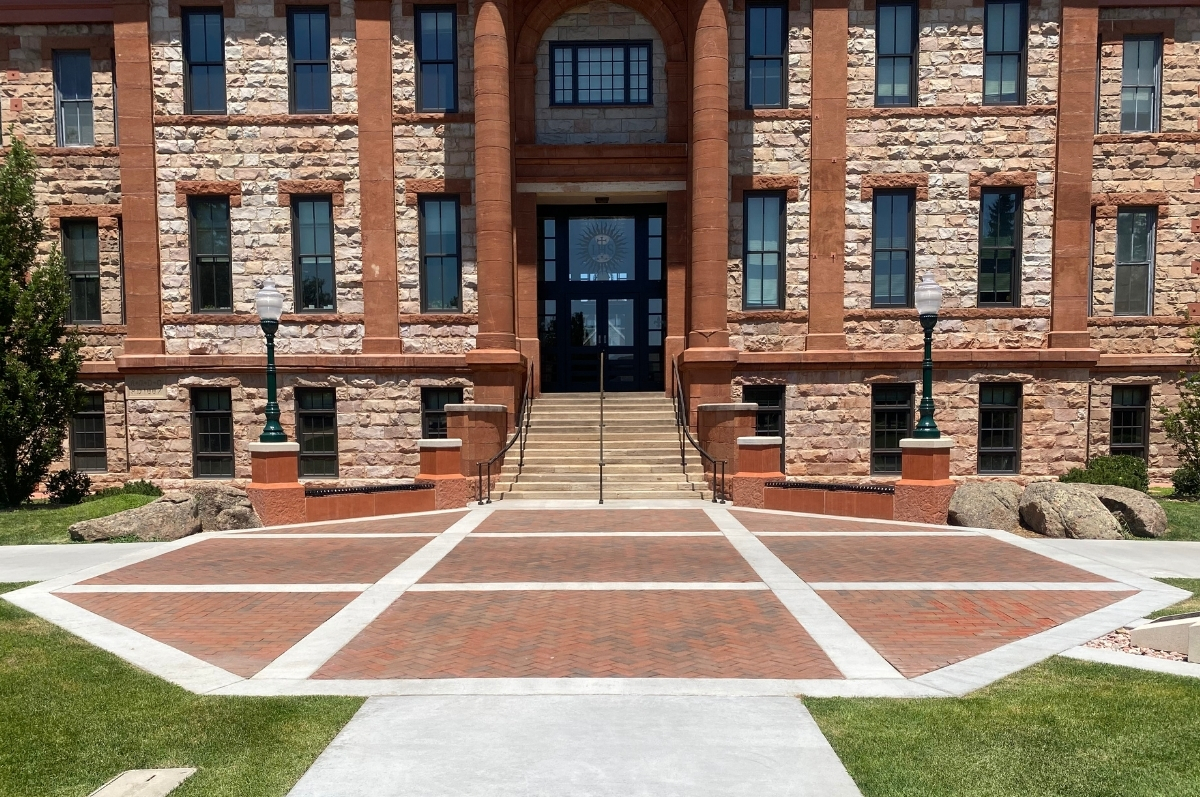
With the new patio came a special recognition for the end of the Manifest Magis fundraising campaign, concluding in the spring of 2025. Raising over $131 million, the campaign supported the endeavors of students, faculty, staff and the community. 26 labelled bricks and a memorial plaque were installed on the patio to recognize the donors who made the largest contributions.
"Our most generous donors are now forever highlighted,” said Cody Waterman, Major Gift Officer in University Advancement. “These bricks inspire future generations of Regis donors to make a mark in a very tangible way.”
From labyrinths and gardens to patios and plaques, the University’s history is built into the physical campus as facets of education, memory and mission. To take a tour of Regis University’s campus, visit https://www.regis.edu/admissions/visit/.