Regis Life
Día de los Muertos: Bringing Memory Home at Regis University
Celebrations for Día de los Muertos began at Regis University on Monday, Nov. 2, a drizzly morning pierced by the anticipation of the day’s festivities. Nearly 200 high school students from the Denver area dashed through the rain, shielding their strikingly colorful altarcitos and alebrijes from the downpour.
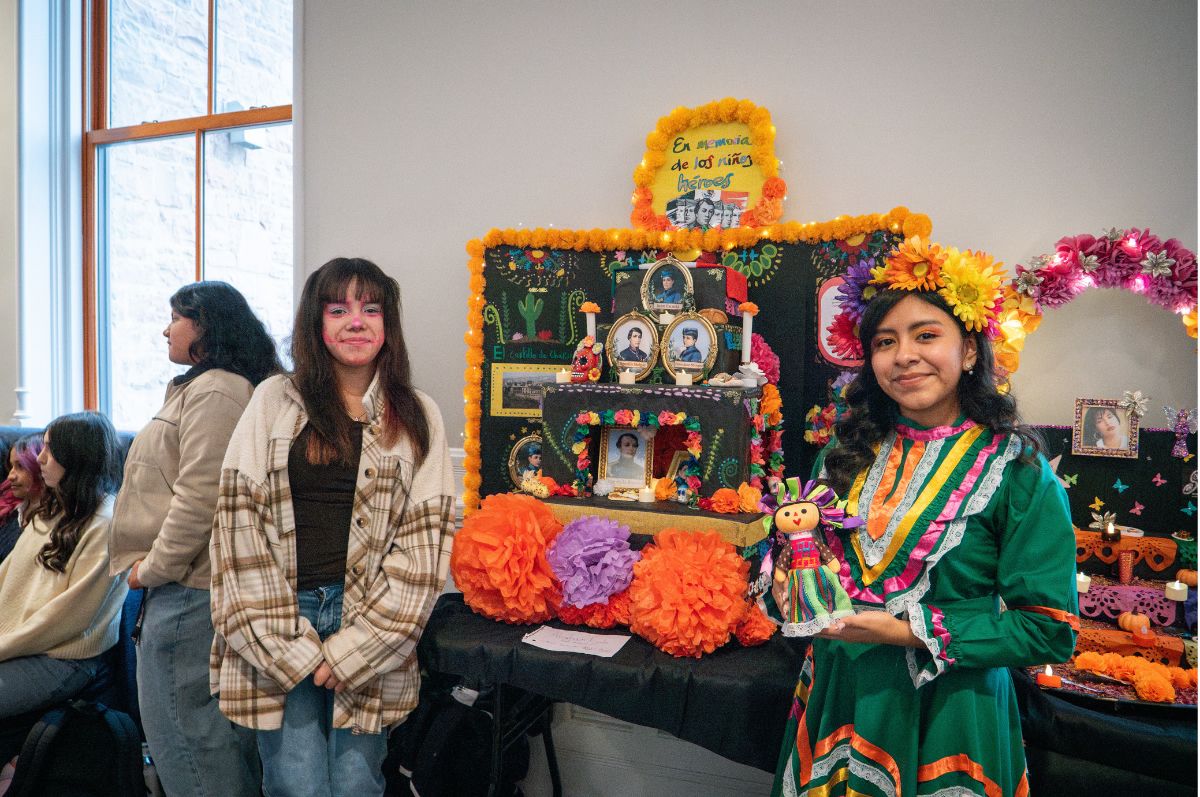
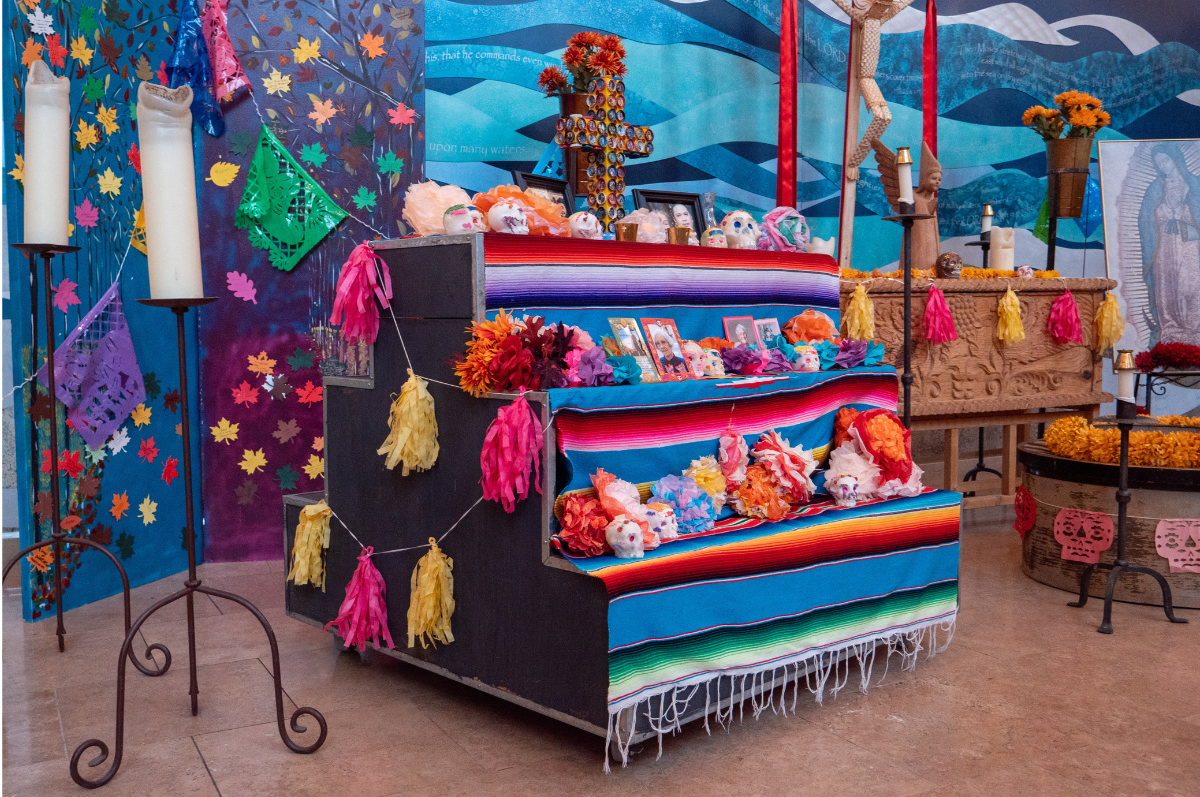
The students’ altarcitos, or “little altars,” are small versions of the grand altars traditionally crafted to recognize the dead during Día de los Muertos celebrations. The students hand made miniature versions of food, drinks and other items typically seen in the ofrenda, or “offering,” to the dead to welcome them to the world of the living.
Día de los Muertos (or “Day of the Dead”) is a Mexican and Mexican-American tradition celebrating and honoring those who have passed, welcoming their spirits back to the land of the living. As a Hispanic Serving Institution (HSI), Regis University is proud to once again commemorate Día de los Muertos on campus with celebrations connecting the community through history, diversity, art and spirituality.
“Our Día de los Muertos celebration is a true expression of our commitment as a Jesuit Hispanic Serving Institution,” said Nicki Gonzales, Vice Provost and Colorado State Historian. “It has grown over the years into a week-long celebration. The richness of the week was truly a team effort involving faculty, staff, students, community members and families.”
Alongside the altarcitos, the mystical alebrijes – colorful, dreamlike animals built from paper mache – lined the corridor of Regis’ Main Hall. These representations of remembrance drew Regis faculty, staff and students alike to observe – and importantly – to learn.
Rev. Fernando Alvarez-Lara, S.J., resident Jesuit and professor of religious studies, lit a bundle of sage and gathered his holy water for a blessing of the students’ altarcitos. Casting the holy water over the students, visitors and the altarcitos, all were connected through this spiritual tradition of Día de los Muertos.
“This tradition is rooted in the notion that grieving is a spiritual practice. When we experience the liminality that something or someone is ending and we feel it, it is important to name the loss,” said Alvarez-Lara. “The construction of altarcitos and their ofrendas, come in very handy as vehicles that allow us to name emotions with material culture, to connect with the source of life and grieve as a community in a public sacred space.”
The high school students then made their way to the St. John Francis Regis Chapel to recite calaveritas literarias, comical poetry commemorating loved ones, friends or celebrities. Joining them were the Mexican Consul and Regis President, Shawna Cooper Whitehead, Ed.D. The students with the best calaverita literaria were then invited to a ceremony and reception at the Denver Art Museum on Sunday, Nov. 8, where they shared their recitations.
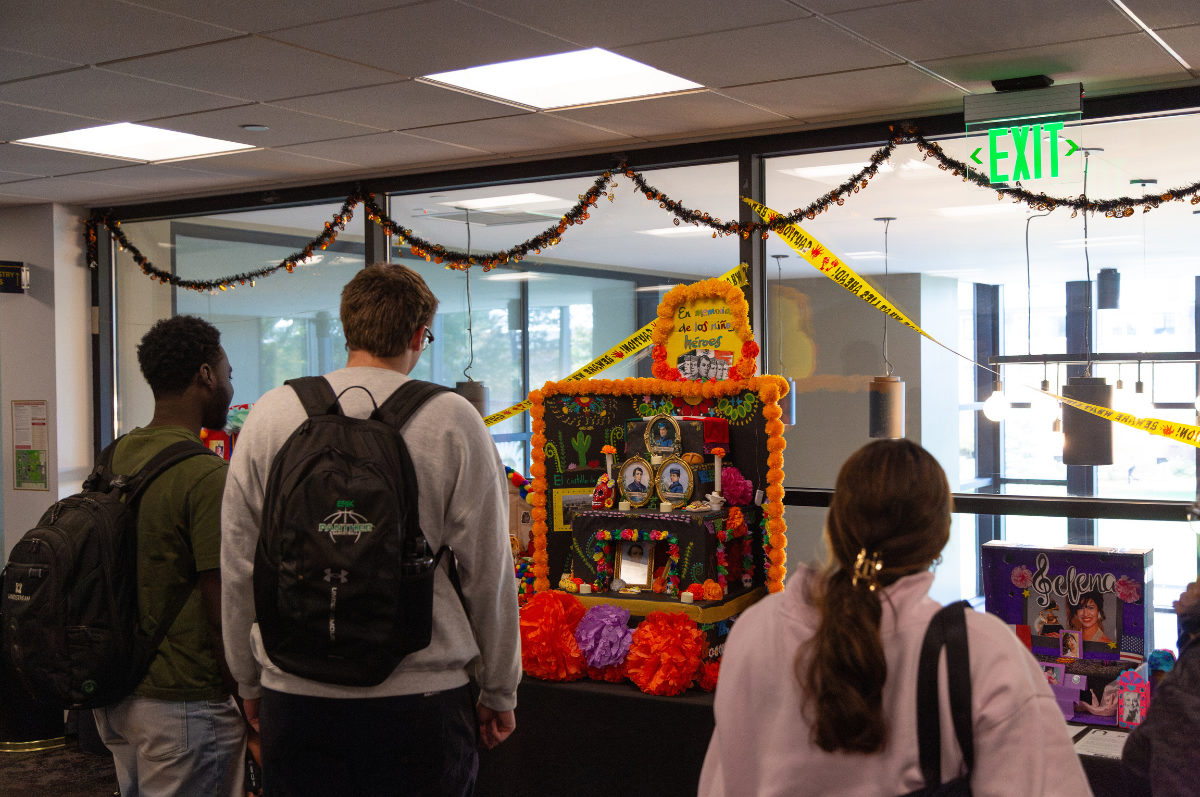
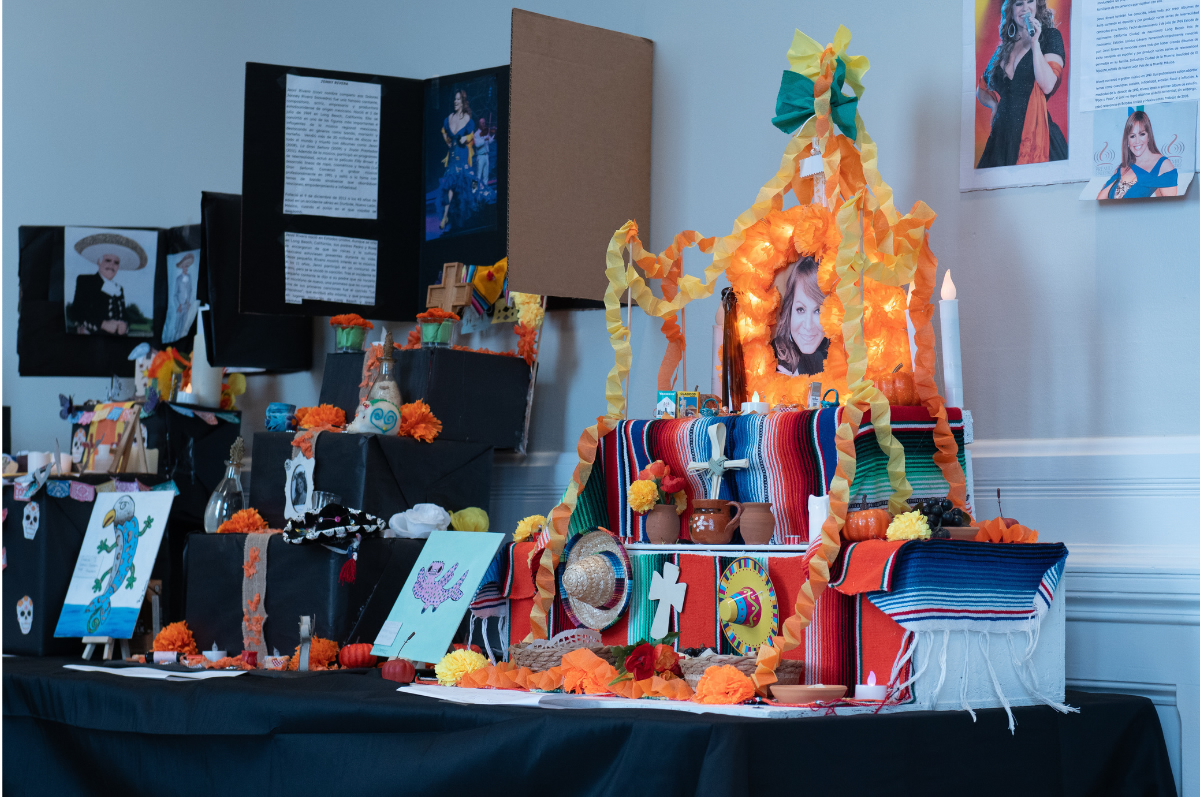
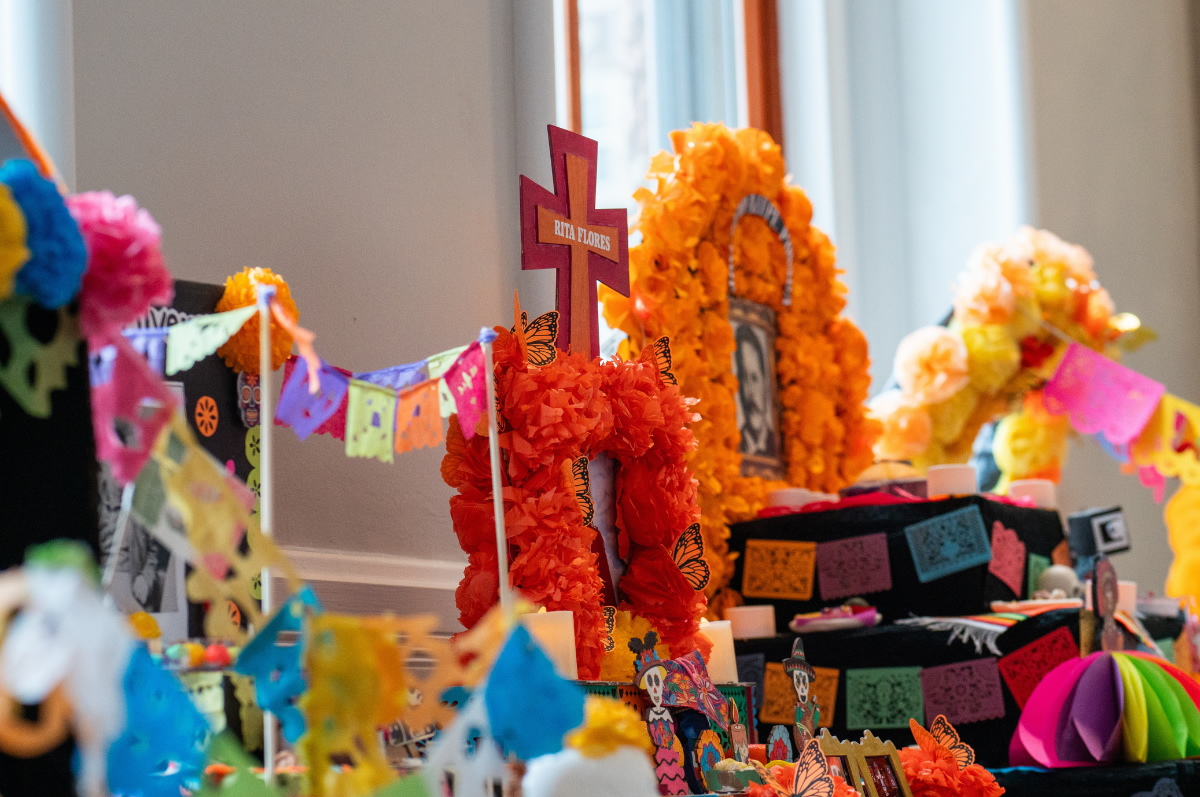
Continuing the celebration the following day, Regis’ own students displayed their handcrafted altarcitos and nichos of loved ones, celebrities and important community figures together in the Student Center. Students bobbed and wove through the crowded room to view each vivid display of heartfelt memory.
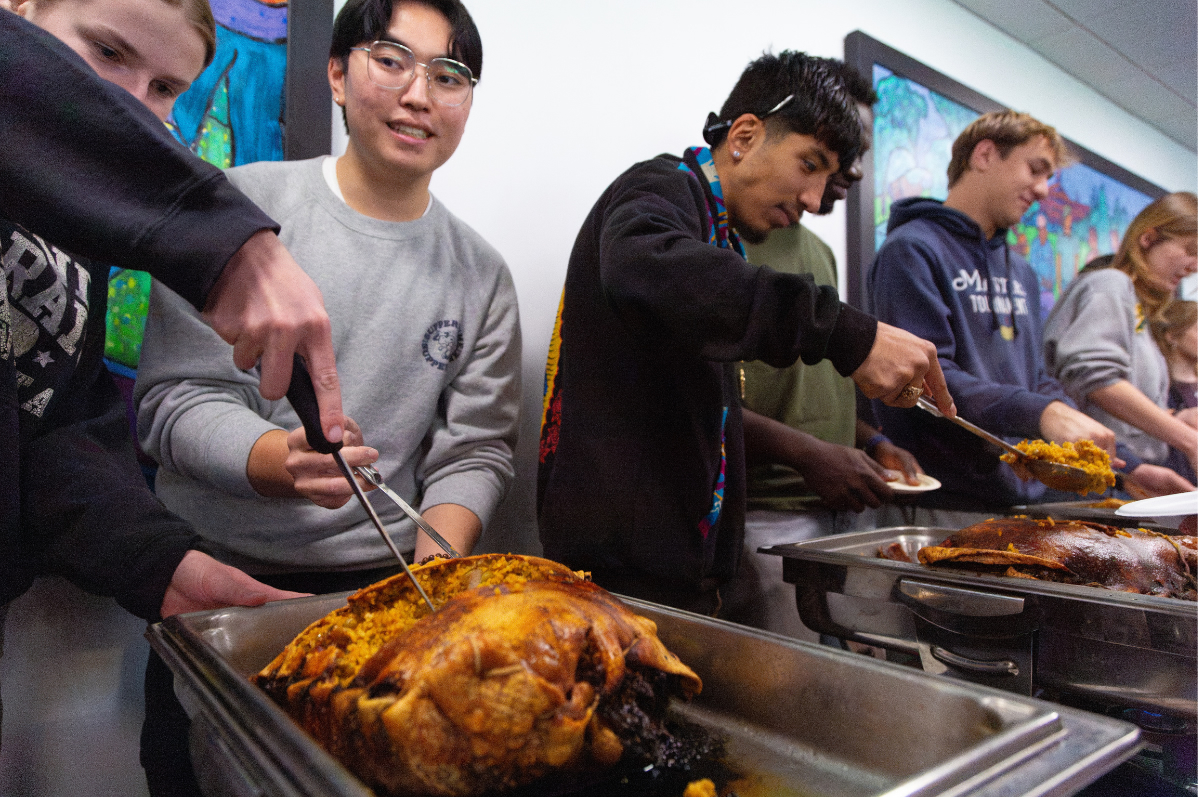
The following evening, the Regis community gathered to share memories and food, surrounded by the Regis students’ altarcitos in partnership with the course “IC420: Memory, History, and Food.” Throughout the semester, the students enrolled in the course have prepared and served traditional recipes for the Regis community to share. Together, they crafted an event to share lechona Colombiana – a Colombian dish of stuffed pork rice and associated with family and gatherings – with the community. Professor Heider Tun Tun, Ph.D., co-teacher of the course, shared that food is indicative of memory. Sharing a meal distills forgotten or suppressed histories to the many.
“Historically marginalized communities have often been denied the opportunity to tell their own histories,” said Tun Tun. “These events create a space for our students to see themselves as historical subjects, with agency and a voice in the issues that shape their communities, and offer an opportunity for students to reclaim their place in history and society, recognizing that their personal and family stories, memories and traditions are not separate from history, but an essential part of our collective past and present.”
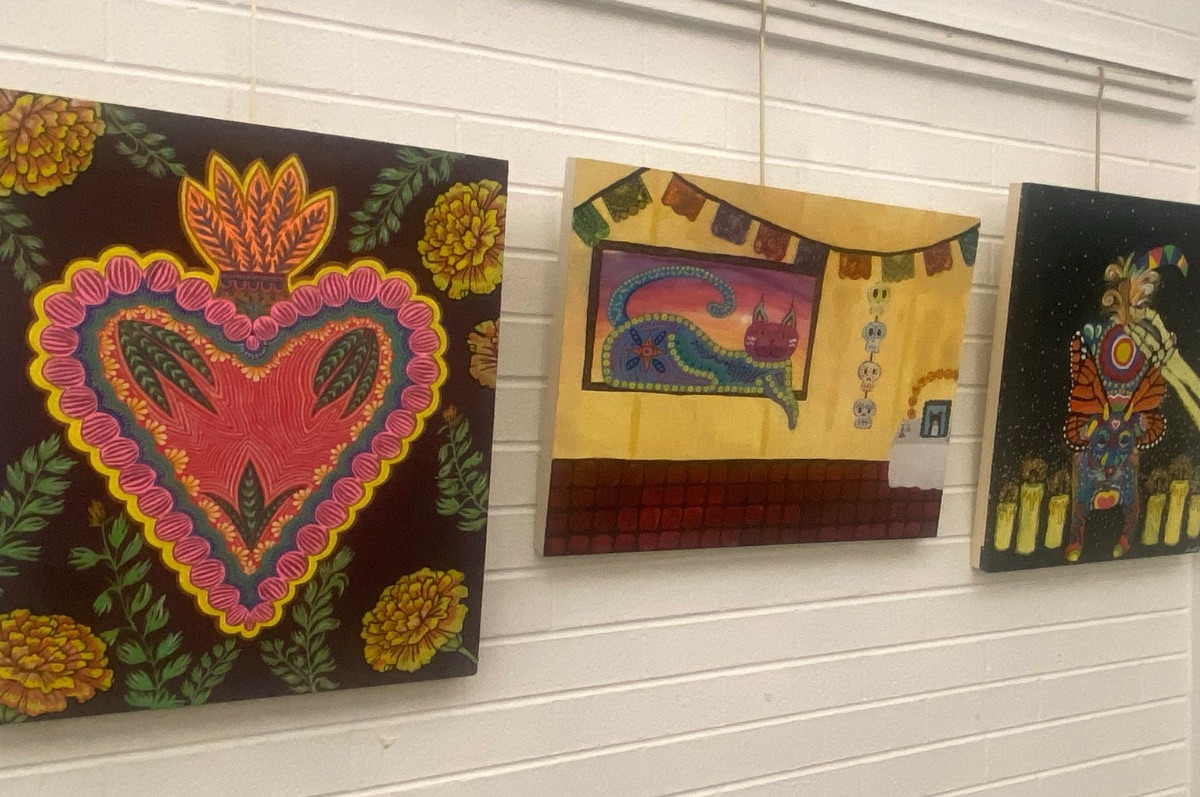
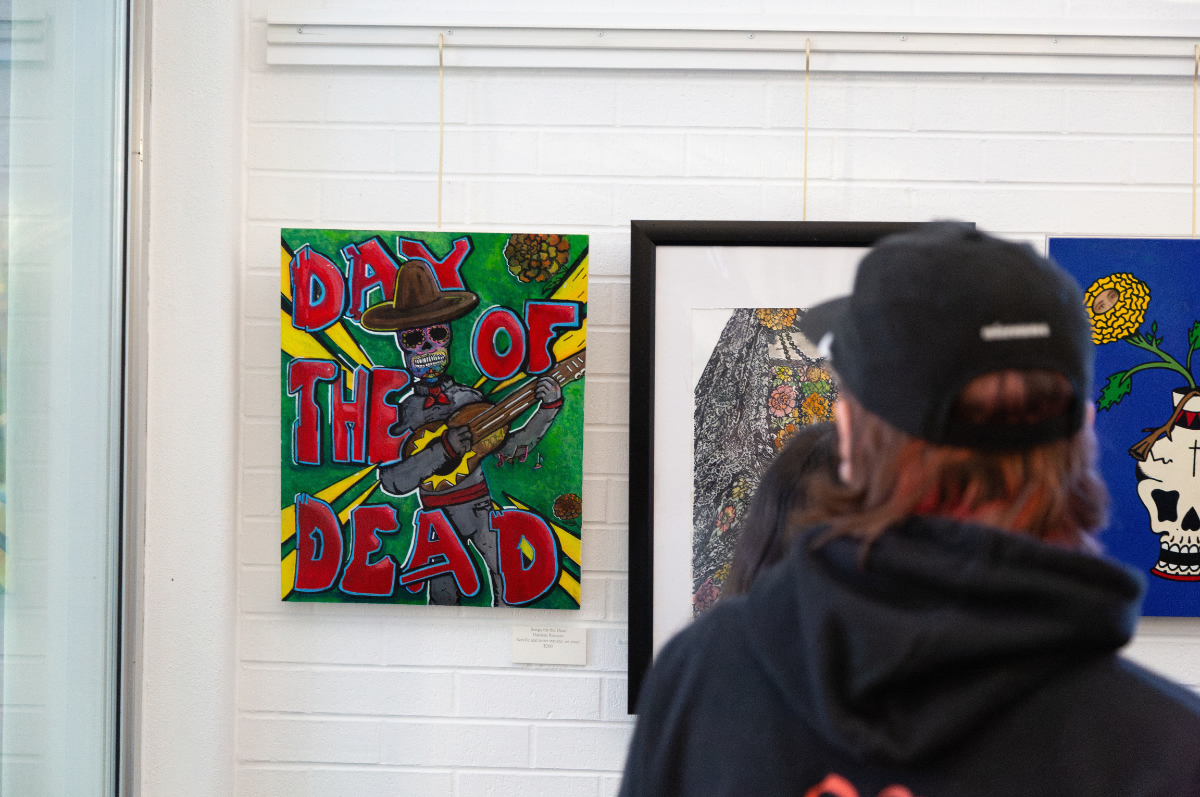
Then, on the evening of Thursday, Nov. 5, the Regis community made their way to the Dayton Memorial Library for the artist reception for the exhibition: Día de Muertos: A Celebration of Remembrance. The exhibition, organized by fine arts professor Tony Ortega, M.A., showcased the artwork of current students, faculty and alumni from various faith and cultural traditions.
The exhibition takes and embraces perspectives of memory and death from various cultures, featuring artists who both recognize the tradition and those who do not. For Ortega, the diverse perspectives are integral to the exhibition, as “Día de los Muertos is about keeping memory alive."
“From an artistic standpoint, it provides a meaningful way to explore the connections between family, cultural identity, spirituality and the generations that came before us,” said Ortega. “In my own artwork, I often draw upon these traditions, using images, symbols and personal narratives to celebrate our cultural memory and the stories that shape who we are.”
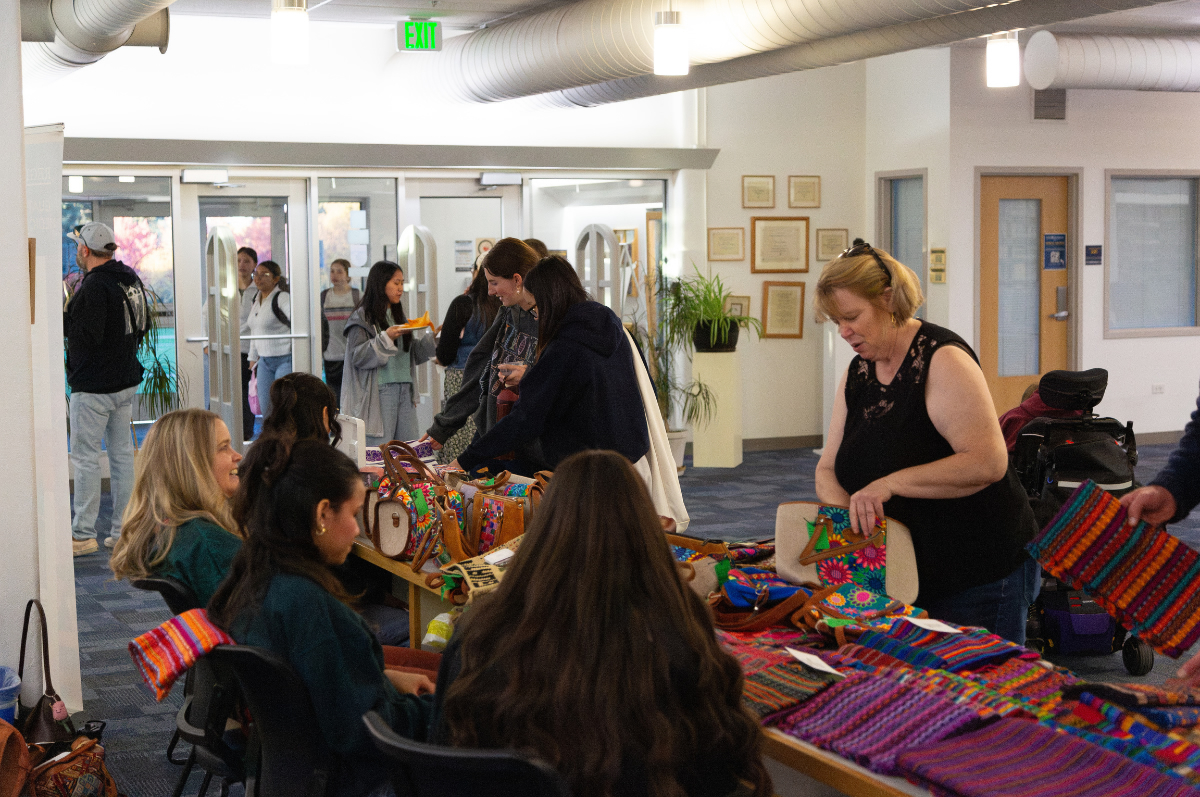
That same evening, the library was filled with the acoustic melodies of a live mariachi band; another artistic devotion to the dead. Wrapping up the celebrations, Regis students were invited to visit Denver’s historic Santa Fe Art’s District on Friday, Nov. 6, exploring public art, altares and important cultural facets of the neighborhood.
Though the Día de los Muertos celebrations have come to a close, memory continues to ring out through campus. For Wladimir Marquez, Ph.D., associate professor of Spanish, the celebrations are a “reminder to our students that their language, culture and family traditions belong in educational spaces and deserve to be celebrated.”
“Each year, we witness young people express tremendous creativity, pride and belonging through their altars, calaveritas, artwork and performances,” said Marquez. “Día de los Muertos has become a bridge between schools and the University, creating opportunities for students to see themselves reflected in higher education and to recognize the value of their cultural heritage as a source of strength and a pathway to future possibilities."