Student Loans for Graduate Students

The Regis Office of Financial Aid continues to monitor updates regarding the passage of H.R. 1, the "One Big Beautiful Bill," signed into law by the President on July 4, 2025. The bill may raise questions and concerns regarding its impact on student aid.

  • As a graduate student, if you have already borrowed Federal Direct or Graduate PLUS Loans for your academic program, the new law does not impact or change your annual borrowing limits or aid eligibility for up to three more academic years, or the remainder of your published program at Regis University, whichever is shorter. Please note that this exception only applies if you maintain continuous enrollment in your current program.
  • If you plan to enroll in a graduate program and start class(es) before July 1, 2026, you may be eligible for current graduate student loan options and limits under the current parameters.
  • Effective July 1, 2026, new graduate student loan borrowers are limited to $20,500 per year and a total maximum aggregate limit of $100,000 (not including undergraduate loans). The new law also limits new professional student loan borrowers to $50,000 per year and a total maximum aggregate of $200,000 (not including undergraduate loans).
  • Beginning in the 2026-2027 academic year, the Office of Financial Aid is required to prorate Federal Direct Student Loan eligibility based on less-than-full-time enrollment. Graduate students are considered full-time if they are enrolled in 6 or more graduate-level credit hours that count towards their degree program each semester.

A graduate degree is an investment in your future, and graduate students may choose to help finance their investment through careful, considerate borrowing. Federal Student loans are offered by the U.S. Department of Education to students who complete a Free Application for Federal Student Aid (FAFSA). When completing the FAFSA, students must include Regis University on their FAFSA using school code: 001363. Additionally, students may seek out educational loans through private lenders. Education loans through private lenders will require additional applications, and the interest rate, amount, and repayment terms and conditions are different from federal student loans.

Federal Direct Unsubsidized Loans

What is a Federal Direct Unsubsidized Student Loan?

Graduate students who complete a Free Application for Federal Student Aid (FAFSA) may qualify for an unsubsidized loan. Unsubsidized means that interest is accruing on the borrowed loan while you are in school. Therefore, you are responsible for repaying the interest accrued from the time the unsubsidized loan is disbursed until it is paid in full.

The Federal Government limits graduate students to borrowing $20,500 annually (summer, fall and spring semesters) with a lifetime limit of $138,500. The $138,500 limit includes any federal direct loans a graduate student may have borrowed while completing their undergraduate degree.

How do I Apply for a Federal Direct Unsubsidized Loan?

Complete the following steps to apply for a Federal Direct Student Loan. Once these steps are complete, review Regis' aid disbursement process and schedule.

  1. Complete a FAFSA and include Regis University’s School Code (001363).
  2. After completing your FAFSA, you will be notified via email when your financial aid offer is available on the Ranger Portal. Under My Awards, you can accept in full, reduce or decline your student loan.
  3. All new loan borrowers at Regis University are required to  complete Entrance Counseling and sign a Master Promissory Note.

How do I repay the Federal Direct Unsubsidized Loan?

You are not required to begin repaying the loan while you are enrolled at least half-time in your graduate degree program. Once you are no longer enrolled at least half-time (non-enrolled or graduated from your program), you have a one-time 6-month grace period before repayment begins. You can access your full loan history, your loan servicer(s) and view repayment options on the National Student Loan Database System.

There is no prepayment penalty, so you may choose to make payments on your loan while you are enrolled in school and you may choose to pay more than the required amount once your loan is in repayment.

Interest Rates

  • For loans borrowed during the 2025-26 academic year: 7.94%

These interest rates are fixed for the life of the loan.

Interest begins accruing when the loan is first disbursed and continues to accrue throughout the life of the loan. You can pay the interest directly to your servicer as it accrues if you wish. If not paid, interest will be capitalized when repayment begins.

Origination Fee: A loan origination fee is proportionately deducted at the disbursement of each installment of the loan. For loans first disbursed on or after Oct. 1, 2020, the fee is 1.057%.


Direct PLUS Loans

What is a Direct PLUS Loan?

A Direct PLUS Loan is commonly referred to as a grad PLUS loan when made to a graduate or professional student.

To receive a grad PLUS loan, you must:

  • be a graduate or professional student enrolled at least half-time at an eligible school in a program leading to a graduate or professional degree or certificate;
  • not have an adverse credit history (unless you meet certain additional eligibility requirements); and
  • meet the general eligibility requirements for federal student aid.

If you have adverse credit history, you may still be able to borrow a Graduate PLUS Loan through one of these two options:

  1. Obtaining an endorser who does not have an adverse credit history. An endorser is someone who agrees to repay the grad PLUS loan if you do not repay it.
  2. Documenting to the satisfaction of the U.S. Department of Education that there are extenuating circumstances relating to your adverse credit history.

With either option 1 or option 2, you must complete credit counseling for PLUS loan borrowers. You may also wish to read this article to learn more about what to do if you are denied a PLUS loan based on an adverse credit history.

The maximum PLUS loan amount you can borrow is the cost of attendance (determined by the school) minus any other financial assistance you receive.

How do I apply for a Direct PLUS Loan?

Use the online application to apply for a grad PLUS loan.

How do I repay a Direct PLUS Loan?

There are several repayment options available that are designed to meet the individual needs of borrowers, including income-driven repayment plans that determine your monthly payment amount based on your income and family size. Your loan servicer can help you understand which repayment options are available to you. Generally, you’ll have 10 to 25 years to repay your loan, depending on the repayment plan that you choose. Learn about your repayment options.

Interest rate: For Direct PLUS Loans first disbursed on or after July 1, 2025, and before July 1, 2026, the interest rate is 8.94%. This is a fixed interest rate for the life of the loan.

Origination fee: Additionally, there is a loan fee for all Direct PLUS Loans. The loan fee is a percentage of the loan amount and is proportionately deducted from each loan disbursement. The percentage for all Direct PLUS loans first disbursed on or after Oct. 1, 2020, is 4.228%.


Other Loans

Private Educational Loans

Private Educational loans can provide funds to assist you in meeting the cost of your education when traditional financial aid and your own resources do not cover all educational expenses. These loans are different from Federal Direct student loans. Based on your credit, the interest rate and repayment terms of a private loan may be comparable or more competitive than federal student loans. We encourage you to explore all of your available options, but please note that when you apply for any loan, lenders perform a credit check, which can impact your credit score.

You can visit Elm Select and select Regis University to compare different private loan options.

Frequently Asked Questions

To apply for most forms of financial aid, including federal loans, all students must complete a Free Application for Federal Student Aid (FAFSA). You must contact lenders directly to apply for private educational loans.

Before you take out a loan, it is important to understand that a loan is a legal obligation that you will be responsible for repaying with interest. You may not have to begin repaying your federal student loans right away, but you do not have to wait to understand your responsibilities as a borrower. Get the scoop: Watch this video about responsible borrowing or browse the tips below it. Be a responsible borrower.

  • Keep track of how much you are borrowing. Think about how the amount of your loans will affect your future finances and how much you can afford to repay. Your student loan payments should be only a small percentage of your salary after you graduate, so it is important not to borrow more than you need for your school-related expenses.
  • Research starting salaries in your field. Regis' Center for Career and Professional Development can help you find starting salaries of recent graduates in your field of study to get an idea of how much you are likely to earn after you graduate. You can use the U.S. Department of Labor's Occupational Outlook Handbook to estimate salaries for different careers or research employment opportunities advertised in the area where you plan to live to get an idea of a local starting salary. You also can use the Department of Labor's career search tool to research careers and view the average annual salary for each career.
  • Understand the terms of your loan and keep copies of your loan documents. When you sign your promissory note, you are agreeing to repay the loan according to the terms of the note even if you do not complete your education, cannot get a job after you complete the program or if you did not like the education you received.
  • Make payments on time. You are required to make payments on time even if you do not receive a bill, repayment notice or a reminder. You must pay the full amount required by your repayment plan, as partial payments do not fulfill your obligation to repay your student loan on time.
  • Keep in touch with your loan servicer. Notify your loan servicer when you graduate; withdraw from school; drop below half-time status; transfer to another school; or change your name, address or Social Security number. You also should contact your servicer if you are having trouble making your scheduled loan payments. Your servicer has several options available to help you keep your loan in good standing.

Graduate students who complete a FAFSA may borrow up to $20,500 annually in a Federal Direct Unsubsidized Loan, and within a lifetime $138,500 loan limit, without a credit check. Credit history and credit score may affect your ability to borrow either a Graduate PLUS loan or a private education loan or affect your interest rate/terms and conditions through a private lender.

Repayment terms may vary depending on the type of loan you borrow. You can visit Federal Student Aid to find more information about repayment plans.

Interest rates vary based on your type of loan. View the current federal student loan interest rates, or contact your lender directly for private loan interest rates.

Annual Limits
Dependent Freshman(0-29) $5,500 (maximum $3,500 in subsidized)
Dependent Sophomore (30-59 credits) $6,500 (maximum $4,500 in subsidized)
Dependent Junior (60-89 credits) $7,500 (maximum $5,500 in subsidized)
Dependent Senior (90+ credits) $7,500 (maximum $5,500 in subsidized)
Independent Freshman $9,500 (maximum $3,500 in subsidized)
Independent Sophomore $10,500 (maximum $4,500 in subsidized)
Independent Junior/Senior $12,500 (maximum $5,500 in subsidized)
Graduate Student $20,500 (unsubsidized)
Graduate Pharmacy $33,000 (unsubsidized)
Lifetime Limits
Dependent Undergraduate $31,000 (maximum $23,000 in subsidized)
Independent Undergraduate $57,500 (maximum $23,000 in subsidized)
Graduate Student $138,500 (maximum $65,500 in subsidized)
Graduate Pharmacy
$224,000 (maximum $65,500 in subsidized)

Yes – as a graduate student, you must enroll in 3 graduate-level credits per semester. Graduate courses must apply towards your current graduate degree program.

The MPN is the Master Promissory Note that you sign to promise to repay the student loan funds to the lender. You may sign the MPN electronically by going to studentaid.gov/mpn/ and creating an account. The MPN will cover all of the student loan disbursements for that lender for up to 10 years or until you request that your lender close it.

The Entrance Loan Counseling is required of each new borrower by federal regulations. The process includes a presentation detailing critical information about your loan and your rights and responsibilities as a borrower. To complete this requirement, go to studentaid.gov/entrance-counseling/ and sign in to take the entrance counseling. Please do not confuse Entrance Counseling with Financial Awareness Counseling. Entrance Counseling is required before you can receive your loan funds. Financial Awareness Counseling is a great tool for your personal use.

If you wish to reduce the loan amount you were offered, you can submit a request to reduce your loan through Ranger Portal. If you wish to increase the amount of loan you wish to borrow after only accepting a portion, please submit a Revision Form.

Although the formal federal definition has not yet been finalized, a professional degree “signifies both completion of the academic requirements for beginning practice in a given profession and a level of professional skill beyond that normally required for a bachelor’s degree.” At Regis University, only Pharmacy (Pharm D.) is included in the proposed federal regulation.

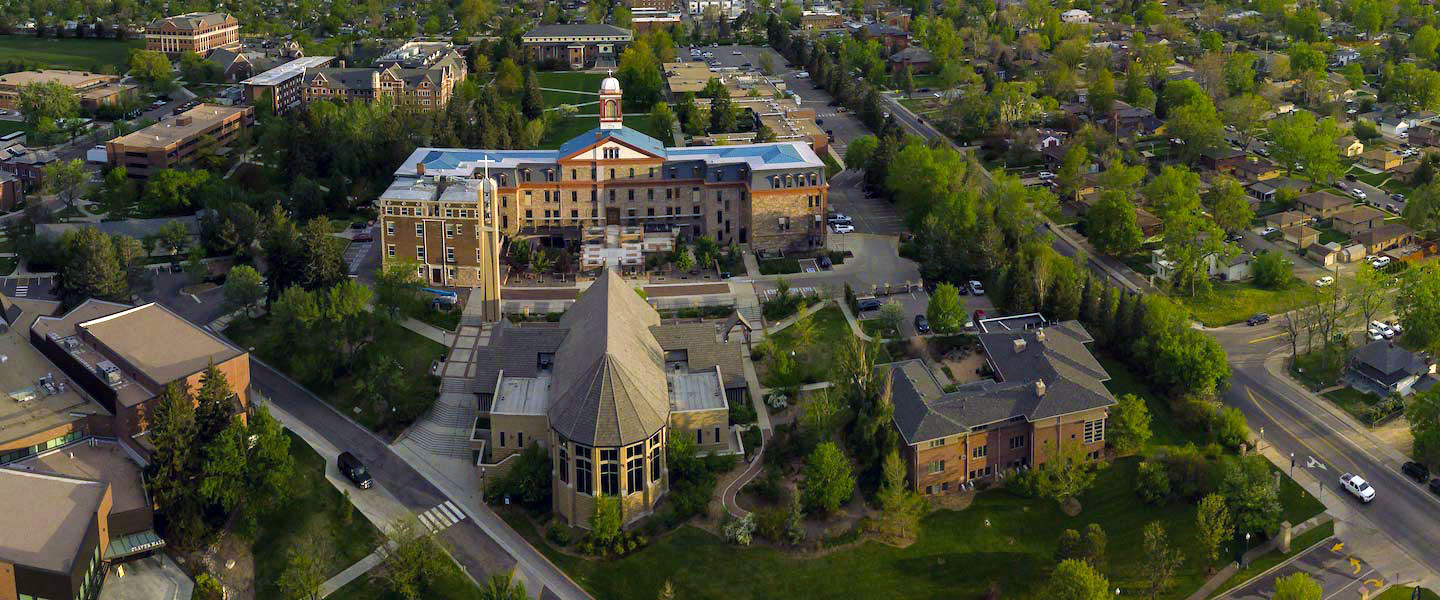
aerial view of Northwest Denver campus
Contact Financial Aid

Location: Clarke Hall 143
Walk-In Hours: Monday, Tuesday, Thursday and Friday, 9 a.m.–4 p.m.

Financial Aid Counselors are not available for walk-ins on Wednesdays. Appointments are encouraged.

rufinancialaid@regis.edu
303.458.4126 | 800.388.2366