Regis Life
Regis students touch the edge of space with the NASA Colorado Space Grant Consortium
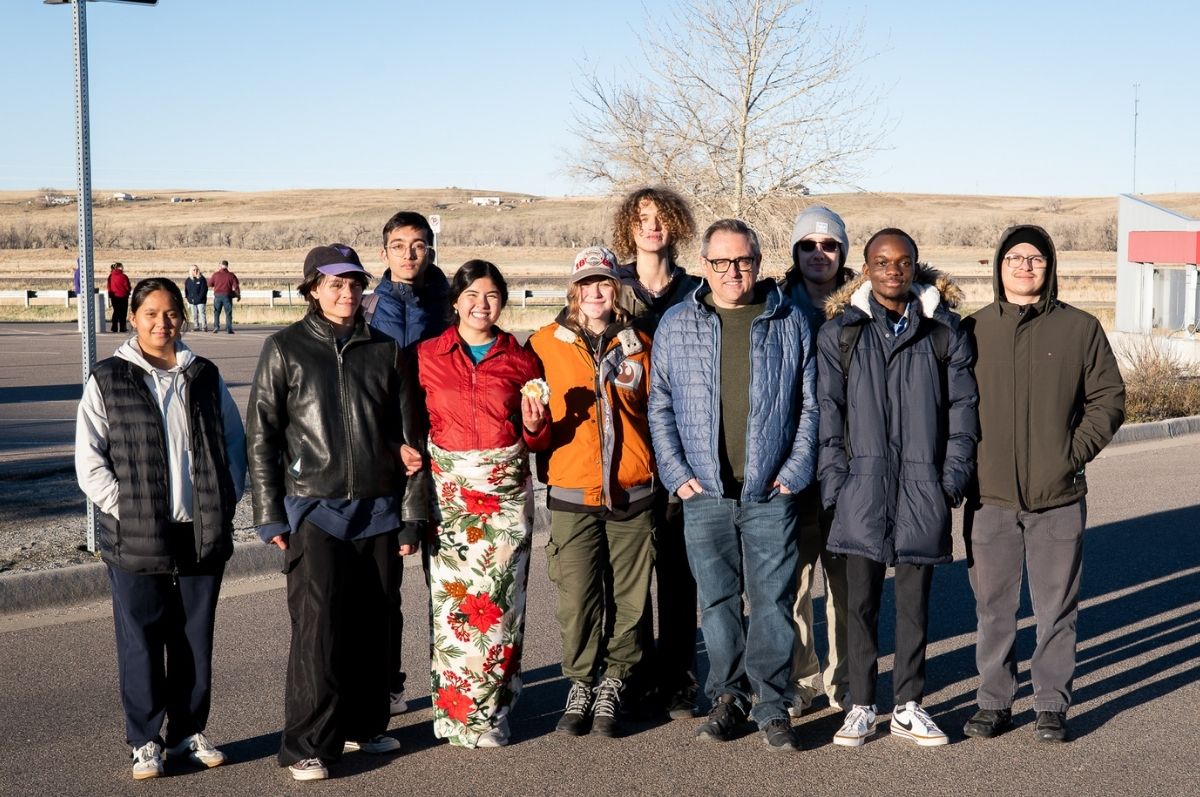
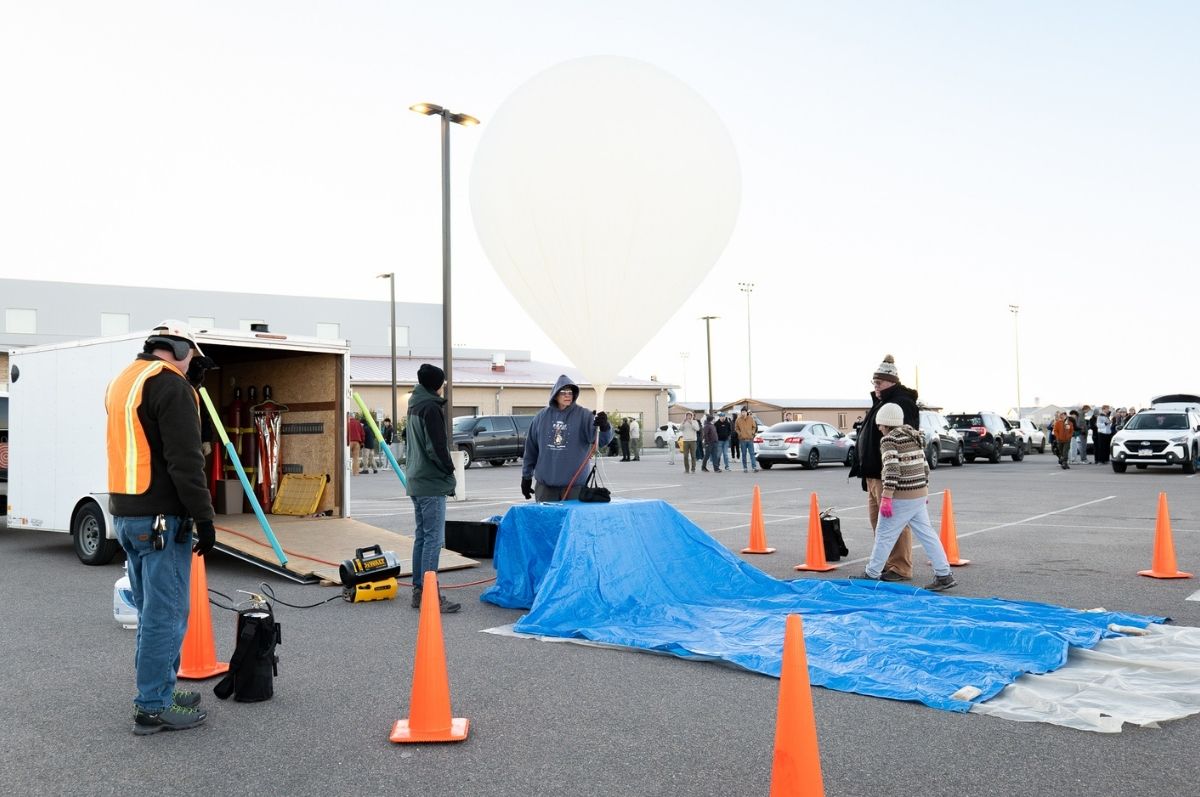
On April 4, 2026, the semester-long culmination of twelve Regis students’ work took to the skies during the DemoSat Quest launch in Deer Trail, Colorado. The DemoSat Program invites students from 21 institutions around the state to craft their own experiments using a high-altitude balloon payload.
The DemoSat Program is part of the NASA Colorado Space Grant Consortium (COSGC), headquartered at the University of Colorado Boulder. COSGC provides students with the opportunities for real-world research experiences through access to space.
In August of 2024, Regis became a partner of the COSGC, with Physics professor Jordi Casanova, Ph.D., at the helm of the project. Since then, Casanova has been the director of the program at Regis University, engaging and enabling students to learn and problem-solve in new ways.
For Casanova, the project has been an amazing opportunity for students to engage in discerning the research process for themselves and building skills that will extend into a career.
“Research is not something easy to do; it requires a lot of effort, and one thing they are learning is to be independent, to learn how to take the wheel of the project.” Casanova continued, “It comes with a lot of things. It's not just coming and participating, but learning how to work on a team, learning the specifics of the project.”
The current research project truly began in the spring of 2025, when Casanova offered the space balloon project as an independent study for Physics students’ research requirement. Casanova submitted his proposal to COSGC for a grant to continue supporting the project at Regis.
From there, Regis received $5,000 to support the project expenses for the two launches in the 2025-2026 academic year. It has since enabled the student researchers to each have a small stipend, establishing legitimacy.
The project was offered again beginning in the 2025 fall semester, where an initial eight students participated in the first launch of the academic year on Nov. 8 of 2025. Breaking themselves into two research teams, the students in the program decided what they would research and how they would execute it.
The first launch in the fall was a success; each payload returned with normal readings in the flight to the stratosphere. Growing in confidence, four more students joined the project for the 2026 spring semester.
Now with twelve students in the program, it has grown to encompass learners from diverse STEM-focused academic backgrounds. With students from three different Physics specializations to Mathematics, Computer Science and Biology, the multidisciplinary nature of the project continues to grow. Sharmila Bc, a Biology major in her junior year, shared how she initially became interested in the project.
"I was kind of surprised when I first heard about this research, because I do a lot of research in biology, but not in physics,” said Bc. “I have never read any articles that combine both physics and biology, so that made me curious.”
This semester, the students refined and tested their research projects in preparation for the launch day. One team researched the effects of the high-altitude conditions on a species of roundworm. The second team investigated how the conditions affected sound waves, particularly the low pressure and temperature of the near-space launch.
The students left for the launch site on April 4 at 4:15 a.m., making the hour-long trek to Deer Trail, Colorado. By 7:30 a.m., they had liftoff, carrying their payloads high into the atmosphere. The balloon travelled over an hour east to Seibert, Colorado, where they landed safely in the middle of a field.
Over the next few weeks, the teams of students will analyze their data in preparation for the Colorado Undergraduate Research Symposium at Red Rocks Community College on April 25. The students will present their findings at the symposium of like-minded students with the opportunity to be published in official conference proceedings, while competing for cash prizes.
As the spring semester comes to a close, the DemoSat Program continues to thrive into the next year. Casanova plans to submit a grant proposal again to the COSGC, which will enable the students to continue developing the projects from the spring launch in the new academic year.
Lucia Giardiello, a senior and Physics major, reflected on the project, citing how the process has been instrumental to her development as a researcher as she takes her next steps in graduating from Regis.
“I've been with it for so long and seeing results, like, when we were first able to actually put this kit together and holding it in my hands, saying, ‘Oh, I did this; I made this.'” Giardiello continued, “It builds my confidence to do other things.”