Doctor of Physical Therapy (DPT)

Moving Forward Practicing Humanity

For nearly 30 years, Regis University has prepared students for successful careers in physical therapy, and the results speak for themselves. The Doctor of Physical Therapy program in the School of Rehabilitative and Health Sciences (SRHS) ranks among the best in the country, a testament to our longstanding commitment to academic excellence and student success.

Grounded in the Jesuit tradition, the program is led by an innovative, values-centered and passionate faculty team. Through reflective, evidence-based and experiential education, you'll grow into a global citizen and a leader in the service of others. You will graduate prepared to promote health with professionalism, social responsibility and cultural sensitivity, transforming not just individual patients but entire communities.

Know what you're looking for? This is for you:

Best Physical Therapy Programs

Ranked #34 by U.S. News & World Report in Physical Therapy programs for 2026!

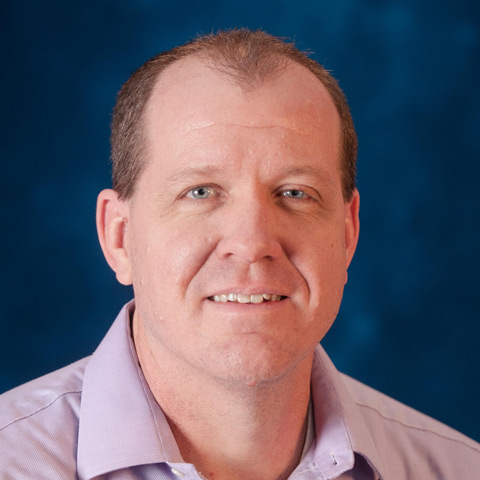
Andrew Honker portrait

Connect with Andy Honker, Assistant Director of Admissions
Call or text: 303.964.6288 | Book an appointment

Complete the form and Andy will be in touch with information about scholarships, important dates and financial aid.

Program Snapshot

Program Format
Taught in 12- and 16-week on-campus terms with occasional virtual classroom sessions

Time Commitment
110 credit hours completed over the course of eight consecutive semesters (including summers)

Important Dates
Mid June: Application Opens
Nov. 2: Priority Application Deadline

See more important dates

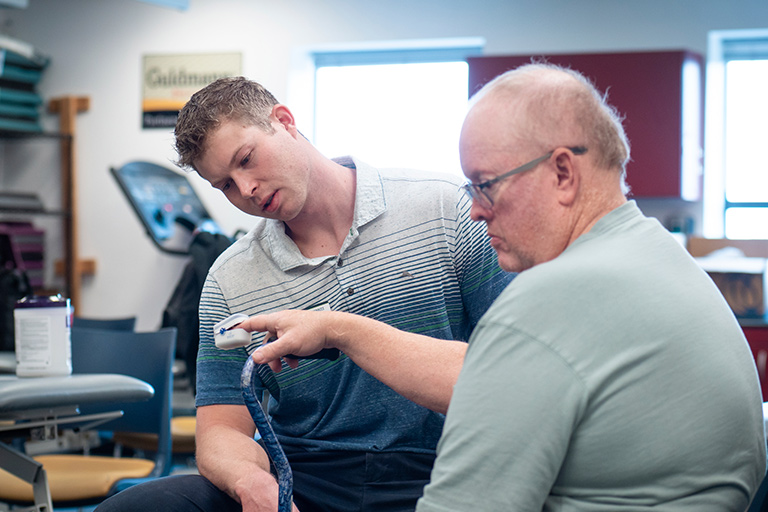
a Regis physical therapy student takes the vitals of a patient in the simulation lab in Thornton, Colorado

Your Success Starts Here

Our results speak for themselves: Our DPT graduates achieve outstanding graduation, National Physical Therapy Exam (NPTE) pass and post-graduation employment rates, preparing them for a wide range of rewarding careers — from orthopedic and sports medicine to research, education and health care leadership.

Explore Graduate Outcomes

Explore Physical Therapy Careers

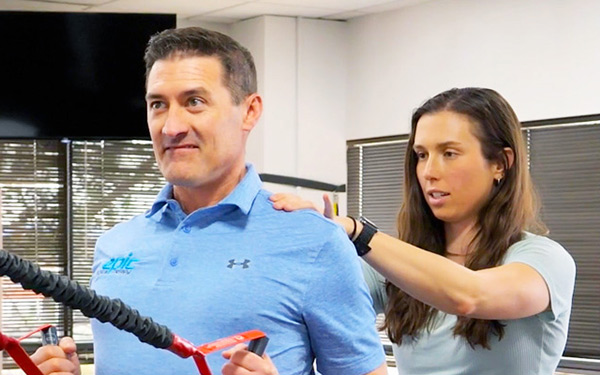
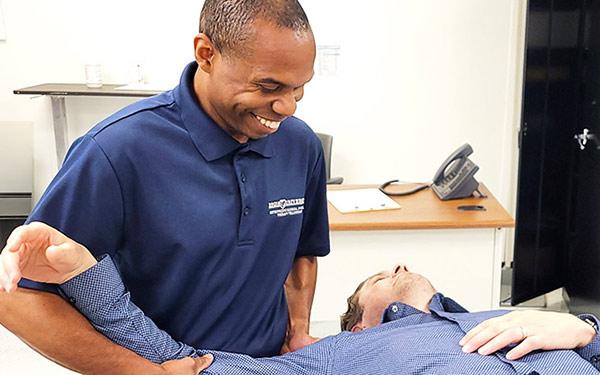
a Regis physical therapy student demonstrates on a faculty member how to do an exercise at the simulation center

Clinical Education

Our clinical education programs place you in progressive, real-world settings across diverse practice environments, building the confidence and clinical autonomy that drive our high graduate employment rate.

Explore Clinical Education

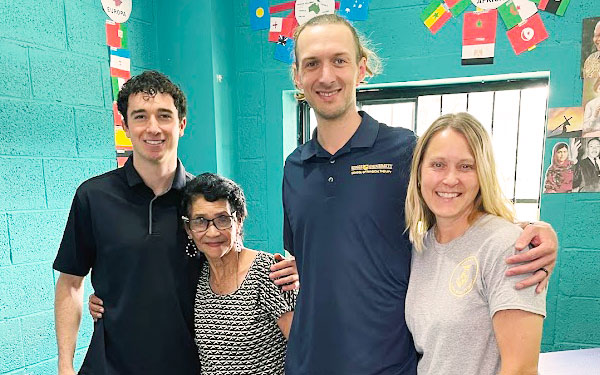
Regis DPT students and faculty smile with their arms around community members at a community clinic during a service learning trip

Service Learning

Get more than you give with service learning that integrates community-based experiences into course work, helping you build professional skills, cultural awareness and a commitment to serving others.

Explore Service Learning

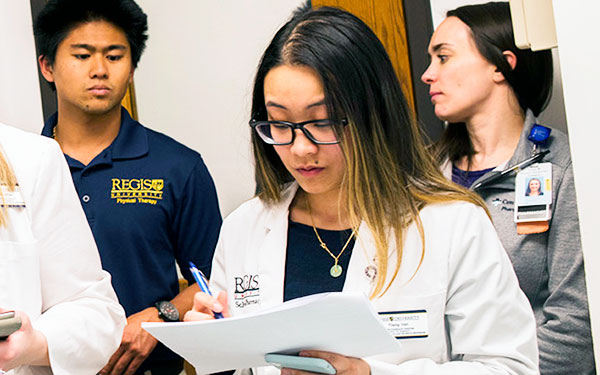
Students in physical therapy, pharmacy, nursing and health services administration confer during a class at the Interprofessional Health Site in Thornton

Interprofessional Education

Learn alongside pharmacy, nursing and counseling students, developing the collaborative skills that improve patient outcomes and prepare you for integrated practice.

Explore Interprofessional Ed

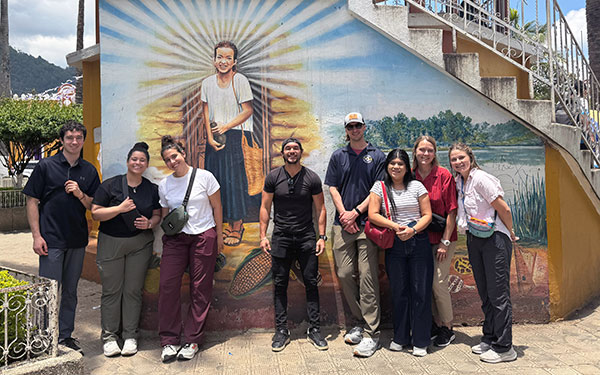
a group of Regis health care students pose in front of a colorful banner during an immersion in South America

Global Health Pathway

A student-driven concentration for select health care students, combining course work, service learning and local and international immersions to build the global health competencies that will set you apart.

Explore the Pathway

a student in the Regis physical therapy program steadies a patient as she performs a walking exercise in the simulation lab

Step Outside the Lecture Hall

Learn in purpose-built spaces, including specialized labs, a clinical simulation center and the RegisCARES physical therapy clinic, providing hands-on training in environments that mirror real-world practice.

Explore RegisCARES Clinic

Explore Our Learning Spaces

Elective Courses: Launch Your Specialty Career Path

In your third year, focused elective training gives you a competitive edge in your chosen specialty — building the foundational knowledge and clinical skills that connect directly to post-professional residency programs, specialty certifications and advanced practice opportunities. These targeted electives don't just prepare you for the job market; they give you the clarity and momentum to launch your career with purpose from day one.

View Full Degree Requirements

lorem ipsum
Healthy Living in Older Adults
Develop specialized competencies in successful aging and geriatric rehabilitation through hands-on experiences with diverse older adult populations, building the clinical reasoning skills essential for geriatric residency programs and careers.
lorem ipsum
Mastering Exercise Progression: Expanding Your Exercise Repertoire
Distinguish yourself with expertise in mind-body movement approaches, integrating Pilates, Yoga, Feldenkrais and Tai Chi into evidence-based practice to bridge traditional physical therapy with integrative movement science, opening doors to wellness, sports performance and post-rehabilitation programming.
lorem ipsum
Advanced Physical Therapy Management of Pediatric Patients
Advance your clinical decision-making and intervention skills for pediatric populations through evidence-based course work and hands-on labs, building the specialized knowledge needed for pediatric physical therapy residency programs and careers.
lorem ipsum
Advanced Mobilization and Manipulation
Build advanced manual therapy competencies with evidence-based manipulation techniques essential for orthopedic specialty practice, positioning you for residency programs and careers in sports medicine, outpatient orthopedic and manual therapy settings.
lorem ipsum
Sports Physical Therapy
Gain the specialized knowledge required for sports physical therapy practice, including field management, concussion protocols, functional performance testing, and return-to-sport criteria, while building interprofessional collaboration and injury-prevention skills that lay the foundation for sports medicine residency programs and careers.
lorem ipsum
Vestibular Rehabilitation
Master the assessment and treatment of vestibular and balance disorders — a high-demand specialty — developing advanced clinical reasoning for differential diagnosis of dizziness, vertigo, oculomotor dysfunction and postural instability, with a clear pathway toward neurologic residency programs and practice.

Learn Here. Grow Here. Belong Here.

Our Faculty

Learn alongside our faculty who bring real clinical expertise into the classroom and who genuinely care about who you become, professionally, academically and personally.

More About Faculty


Diverse Demographics

Diversity of age, identity, race, ethnicity and geography enriches learning and prepares our graduates to provide culturally responsive, patient-centered care.

More About Diversity


Community Culture

At Regis, physical therapy is about more than clinical technique. It's about treating the whole person and standing for and with others in the pursuit of health and justice for all.

More About Culture


How to Apply

All application materials for the DPT program should be submitted through PTCAS, including:

  • Completed PTCAS application
  • Official university and/or college transcripts sent directly to PTCAS
  • Three electronic letters of recommendation (one must be completed by a licensed physical therapist and one by college-level faculty)
  • GRE optional

Highly qualified applicants will receive a written invitation to interview with faculty on a designated date and time. During the visit, you'll tour campus, attend a class and meet current students.

Tuition and Financial Aid

Tuition for the 2026-2027 academic year: $1,066 per credit hour
Total program credits: 110
Enrollment deposit: $1,000
If admitted, a nonrefundable enrollment deposit is required to hold your position in the DPT program. The deposit will be applied toward your tuition.

Tuition is one part of the overall cost of attendance, which includes all expenses students may have, including basic living costs. For more information about tuition, fees and your estimated cost of attendance, visit our Cost of Attendance for Doctoral Students page. Tuition and fees are subject to change.

Additional fees may include a student activity fee, application fee, lab fees, background check and drug screen among others. Regis offers a variety of scholarships, grants and other programs to help you pay for school. Visit Financial Aid for more information.

View Doctor of Physical Therapy Financial Fact Sheet

Dates to Remember

Application opens: mid June

Priority deadline: Nov. 2

Interviews: Jan. 2027

Program starts: Late Aug.

Applications must be received by 11:59 p.m. Eastern time on the application deadline.

What's Next?

Learn more about what to expect, from completing the application process to next steps for admitted students.

Frequently Asked Questions

When must prerequisite course work be completed?
All prerequisite course work must be completed before you begin the program in August. However, you may apply before completion of all prerequisites. We do not have a minimum number of prerequisite courses that must be completed at the time of application. Students who are admitted with outstanding prerequisite course work are admitted conditionally and must complete all outstanding prerequisites before matriculation to meet the conditions of acceptance.

Do I need to complete some or all of the highly recommended courses to be accepted?
No. Highly recommended courses are not a requirement to apply. These courses are strongly recommended to enhance your foundational knowledge in preparation for a doctoral degree in physical therapy. Though not required, completing some or all of these courses before the application deadline will grant you additional consideration during the review of your application.

Where can I take my prerequisites?
You can take prerequisites at any regionally accredited university or college.

Can I take prerequisites at a community college?
Yes, prerequisites may be taken at a community college; however, taking prerequisites at a four-year institution may better prepare you for the course work you will take as a graduate student.

What is the time limit on prerequisites?
We recommend that prerequisites be taken within the last five years; however, we will consider all courses regardless of the amount of time since completion. Because of the nature of the program, it is important that students have knowledge of all prerequisite subjects in order to build on that foundation.

Can online courses meet the prerequisite requirements?
Yes. We accept online courses for prerequisite requirements as long as they meet the following: completed at a regionally accredited institution, meet the semester-hour and grade requirements, and contain a lab component if required.

If I’ve ever taken a higher-level biology course for four semester hours, can I be exempt from the eight-semester-hour requirement?
No. All applicants must complete a total of 8 semester hours of biology, including lab course work. Any biology course with a lab will count toward the eight-semester-hour prerequisite requirement, but a total of eight semester hours is required.

What courses count for the Behavioral Science prerequisite?
Any course taken in a psychology, sociology or anthropology department will count toward this requirement. Although Development and Abnormal Psychology are recommended, any six semester hours from these departments will fulfill this requirement.

What statistics course do I need?
The statistics course must include inferential and descriptive statistics. It is recommended that the statistics prerequisite be taken in a department of psychology, sociology, education or public health, but we will accept statistics courses from other departments as well.

Do you accept combined Anatomy and Physiology courses?
We will accept combined courses as long as the full series was completed and the courses included lectures and labs. All prerequisite courses must be completed with a C or above.

Can I take ________ course for _______ course?
Students often want to determine whether a particular course will substitute for one of the prerequisites. Typically, course substitutions are not accepted, and students need to complete the courses as listed. However, if you would like to send a course description from the school catalog, and preferably a course syllabus, with a note regarding your rationale for substitution to dpt@regis.edu, we will be glad to evaluate your request.

Do Advanced Placement (AP) courses taken in high school count toward prerequisite requirements?
Yes. We currently accept AP courses as prerequisites if your undergraduate institution accepted them as credits toward your undergraduate degree.

How do you calculate repeated courses into the prerequisite GPA for Regis University?
Any repeated courses will be factored into your Regis University prerequisite GPA as an average. PTCAS GPAs include all United States college courses with grades and credit hours at all United States regionally-accredited institutions, including repeated courses.

What is the deadline for submitting applications?
Application for the class starting in Fall 2027 is available through the Physical Therapy Centralized Application Service (PTCAS) beginning mid-June 2026. Go to ptcas.org for details. Applications must be e-submitted by the priority application deadline of Nov. 2, 2026. It is the applicant’s responsibility to confirm that all application items (including all transcripts and references) have been received and the application is complete by the deadline.

Does Regis University require the essay portion of the PTCAS application?
Yes. You are required to submit the essay portion of the PTCAS application.

Does Regis University require additional applications, application fees or supplemental items?
No, Regis University does not require any additional fees, applications, or supplemental items. Once a PTCAS application has been submitted and verified, we do not require any additional information. Communication will be sent to confirm receipt of your application and determine whether it is complete or incomplete.

Do I need to send transcripts directly to Regis University or only to PTCAS?
As part of the application process, you should submit official transcripts directly to PTCAS. You do not need to submit official transcripts directly to Regis University at the time of application.

Are there any requirements as to who should complete the letters of recommendation and how many are needed? Three electronic letters of recommendation, sent directly to PTCAS on the standard PTCAS form. Paper references are no longer accepted by PTCAS. One letter of recommendation must be completed by a licensed physical therapist, and one must be completed by a college-level faculty member. The third recommendation should be completed by either a second physical therapist, a second academic reference or a professional reference. Arrange for PTCAS to receive all your references by the application deadline date. Personal letters of recommendation are not accepted.

Should I submit additional material, like a resume, observation hour forms, etc.?
No. You only need to submit the items required for your PTCAS application, which includes the PTCAS application, essays, all official transcripts from schools attended and required references.

Does the Doctor of Physical Therapy program consider credit for transfer from other health profession education programs?
Transfer credit from other health professions education programs to the Doctor of Physical Therapy (DPT) program will be considered for each individual student's request. Courses under consideration for transfer must be graduate level and must have been taken within the past three years in a ground-based format.

The school dean and director of graduate studies will evaluate the syllabus from each requested course for equivalency of course content and rigor. Credit hours earned with grades of B- or better at an accredited institution of higher education before admission to the DPT program may be transferred based on equivalency review. Grades of C+ or below are not accepted. Credit hours are transferred, but quality points are not. The student's grade point average will be determined only by work done at Regis University. A maximum of 12 semester hours of transfer credit will be accepted.

The GRE is optional and not used for ranking.

What is the institution code and department code for sending GRE scores?
Regis University's Physical Therapy GRE code is 7671. Your official score will be sent to PTCAS and provided to Regis University via your PTCAS file. Applicants need to complete the General Test of the GRE, which includes the verbal, quantitative and analytical writing sections. Additional information about the GRE can be found on the ets.org website.

What is the last test date for the GRE for the current application cycle?
You must take your GRE before the Application Priority deadline.

If I take the GRE more than once, how do you interpret the scores?
We will use the best score from each section if multiple scores are available.

Do you have a specific undergraduate major that is preferred over others?
No. You may complete an undergraduate degree in any major. No academic major is given priority consideration during the selection process. The requirements for the entry-level Doctor of Physical Therapy program are a baccalaureate degree and the program prerequisites.

Do you have a minimum GPA to apply?
We recommend a minimum cumulative anatomy and physiology and science GPA of 3.0, and a minimum prerequisite GPA of 2.75 to be eligible to apply.

Did you give preference to Colorado residents?
No. Preference is not given to Colorado residents over other applicants.

Do you give preference to Regis College undergraduates?
We give additional consideration to applicants who complete the undergraduate Health and Exercise Science major or minor at Regis University, but we do not guarantee admission to these students.

As a Jesuit institution, do you have a faith tradition that is a criterion or expectation for acceptance?
Regis University does not use religion as a criterion for admission. However, additional consideration is given to graduates of Jesuit institutions, regardless of faith.

How many hours of volunteer service do I need for the program?
We don't require a specific number of hours; however, we expect candidates to have enough experience to serve as evidence of their commitment to the career choice of physical therapy. You should obtain broad exposure to the various roles and responsibilities of the practicing physical therapist and have a general understanding of the future direction of physical therapy as a profession. A great reference for information about the field of physical therapy is the American Physical Therapy Association.

How many applications do you receive?
We received close to 450 applications this past year and interviewed nearly 250 of those applicants.

What is the size of each DPT cohort?
Each year, we bring in a new DPT class of 89 students.

What are your acceptance and matriculation rates?
We have an average application-to-acceptance rate of 47% and an admit-to-matriculation rate of 60% over the past four admissions cycles.

If I applied last year, do I have to submit the entire application?
Yes. Regis University participates in the common application (PTCAS). Therefore, all re-applicants will need to submit new, complete applications via the PTCAS system.

What are my chances of being accepted into the program (if I have a low GPA)?
We look at several factors when evaluating applications, including prerequisite grades; cumulative anatomy and physiology, and sciences GPAs; recommendations; and completion of highly recommended courses. Additional consideration is given to applicants who complete the undergraduate Health and Exercise Science major or minor at Regis University, and/or come from a diverse background, have earned a graduate-level degree, or have earned an undergraduate degree from a Jesuit university. It is the combination of these factors that determines whether you will be invited for an interview.

When will I find out if I have been selected to interview? When will my application be reviewed?
We will begin to review applications upon submission until the deadline. Invited candidates will be notified of their invitation to interview by email starting in mid-November. As a final step in the admissions process, a select number of qualified candidates will be invited to interview. Interviews will be scheduled in January 2027. Around 250-300 candidates are interviewed annually for 89 seats in our fall class.

Those candidates who are not selected to interview will be notified by email as well.

Are your interview dates flexible?
No. While accommodations may be made to interview virtually, no exceptions are made to an assigned interview date.

How do students pay for the program?
Most students pay for tuition and living expenses through student loans. Once admitted to the program, you will have a financial aid counselor available to work with you on securing loans. Additionally, we offer several merit-based scholarships, ranging from $10,000 to $20,000 per scholarship to each incoming class. All students admitted to the program are considered for scholarships. Awards are based on academic achievement and/or diversity.

Is there housing available for graduate students on campus?
On-campus housing for graduate students is limited. Contact your admissions counselor to learn more.

The majority of DPT students live within a 5- to 20-minute commute from campus in apartments or homes for rent. Once admitted to the program, the Office of Admissions works with incoming students to help connect those who are interested with roommates. Additionally, incoming new students are paired with current students to help them make a smooth transition to Regis. Visit our Off-Campus Housing page to browse off-campus housing options.

What is the structure of the DPT curriculum?
The central concept of the curriculum is the movement system, presented through a systems approach across the lifespan. The curriculum provides a strong foundation in the sciences supporting physical therapy intervention and the rationales linking theory and application to clinical practice. Embracing the concept of “adult learning,” where instructors serve as facilitators of learning and thinking, and not solely as dispensers of knowledge, the study of structured problems and issues in small-group tutorial sessions throughout the curriculum enhances the integration of information from current and previous courses.

The Doctor of Physical Therapist (DPT) Education program at Regis University is accredited by the Commission on Accreditation in Physical Therapy Education (CAPTE): 3030 Potomac Avenue, Suite 100, Alexandria, Virginia 22305-3085 Telephone: 703.706.3245 Email: accreditation@apta.org Website: capteonline.org If needing to contact the program/institution directly, please call 303-458-4910 or email dpt@regis.edu.

Choose Your Path, Shape Your Career

A DPT student leads classmates in physical therapy stretches and exercises in the Fitness Center on the Regis Denver, Colorado campus

3+3 B.S. Health and Exercise Science to DPT

This pathway is designed for students who don't yet have a bachelor's degree, offering a seamless, accelerated six-year track that combines undergraduate study with early entry into our nationally recognized DPT program, saving a full year of time and tuition compared to the traditional path.

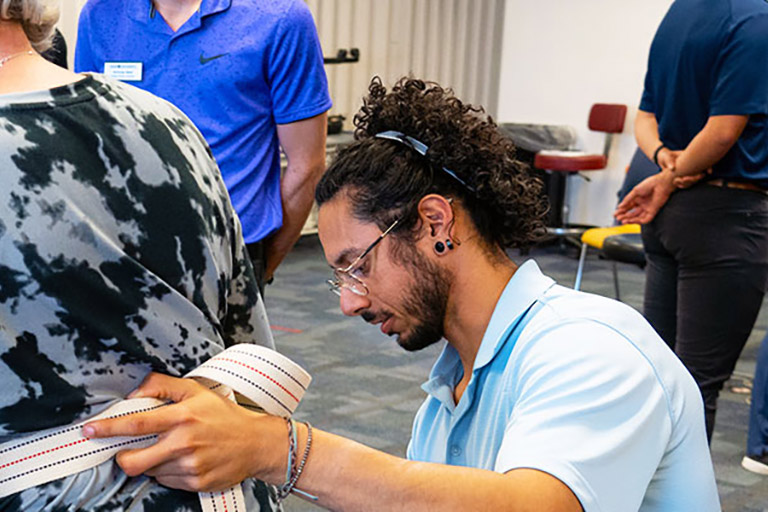
A Regis Physical Therapy Fellowship student works with a client in a classroom on the Denver, Colorado campus

Fellowship in Orthopaedic Manual Physical Therapy

This accredited Fellowship is a flexible hybrid program for licensed physical therapists ready to pursue advanced manual therapy training and the globally recognized Fellow of the American Academy of Orthopaedic Manual Physical Therapists (FAAOMPT) credential without stepping away from clinical practice.

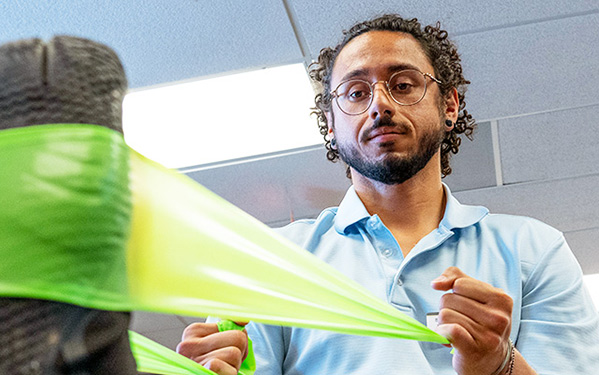
a Regis physical therapy student demonstrates a stretch using a resistance band in a classroom on the Denver, Colorado campus

Residency in Orthopaedic Physical Therapy

This accredited, one-year Residency is a flexible hybrid program for licensed physical therapists, combining online courses, two on-campus intensives in Denver and 150 hours of mentorship to fast-track professional development and prepare graduates for the Orthopaedic Clinical Specialist exam.

A Culture of Excellence

The Doctor of Physical Therapy Degree is offered by the School of Rehabilitative and Health Sciences within the Rueckert-Hartman College for Health Professions.